المكتب الوطني للدفاع عن الارض ومقاومة الاستيطان منظمة التحرير الفلسطينية
مقالات مشابهة
By: Madeeha Al-A’raj
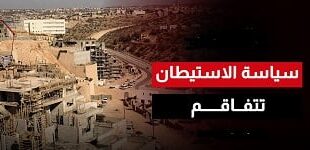
The ‘National Bureau for Defending Land and Resisting Settlements stated in its latest weekly report , that an unprecedented wave of settlement activity is sweeping the West Bank, as approvals of construction plans and land confiscation accelerating, especially after the occupation authorities approved the E1 construction project at the end of August that considered the most dangerous of its kind in decades. This coincides with the approach of the Israeli elections at the end of next year, or even earlier if the elections are brought forward. Government members, led by Smotrich, are vying to promote new settlement plans, exploiting their current positions to intensify settlement activity and the confiscation and plundering of land in the West Bank.
The Yediot Aharonot Newspaper stated that ‘FM Smotrich has broken records in settlement construction decisions and in declaring West Bank lands as state lands.’ This accurately describes Smotrich’s policy, as he now controls everything related to colonial settlement activity in the West Bank. Since the formation of Netanyahu’s government, 25,960 dunams have been declared state lands. To understand how serious this matter is, only 28,000 dunams have been declared in the past 27 years.
Under his powers, Smotrich announced last week that the construction of 1,973 settlement units in the West Bank would be approved as part of a wave of construction he has initiated since assuming office. The Planning Department of the Civil Administration and the Higher Planning Council in the West Bank published the agenda for their upcoming meeting, during which the new plans are expected to be approved. This move is part of Smotrich’s ongoing policy of strengthening and expanding Jewish settlements throughout the West Bank and the Jordan Valley.
Among the projects expected to be approved are: 133 housing units in Taffuh West ‘south of Nablus’, 720 units in Avnei Hefetz adjacent to Tulkarm from the east, 568 units in Einav in Tulkarm Governorate, about 178 housing units in Ganei Modi’in in Ramallah and Al-Bireh Governorate, about 246 in Rosh Tzurim on the lands of Nahalin village in Bethlehem Governorate, and about 128 units in Etz Efraim on the lands of Mas’ha village in Salfeet Governorate.
At the same time, the Higher Planning Council approved a plan at the end of Oct to build 1,300 new settlement housing units in the Gush Etzion settlement bloc south of Jerusalem. According to Channel 14, these units will be built in the Russian Mountain neighborhood south of the Alon Shvut settlement, along with schools, public buildings, parks, and a large commercial area expected to serve neighboring settlements, making it the largest construction plan in the area in some time. The occupation authorities also officially gave the green light to the E1 settlement plan, which connects Jerusalem to the Ma’ale Adumim settlement and severs the geographical contiguity of the West Bank from north to south, in a move that represents a strategic shift in the settlement map.
The plan includes the construction of 3,400 housing units in an area that has been the subject of repeated political promises since the 1990s. Ariel Sharon emphasized its importance in 1990 for creating Jewish continuity and linking Jerusalem to Ma’ale Adumim. Later, both Ehud Olmert and Benjamin Netanyahu announced their intentions to build, but the plans remained confined to paper as a result of international and political pressure.
Since Oct. 7, 2023, which marked a radical shift in the political and security landscape, settlers have viewed the events that followed as a historic opportunity. That date, along with subsequent developments and a brutal war on the Gaza Strip, was used as a launching pad for attacks on Palestinian villages and towns, and the seizure of vast tracts of land under the pretext of ‘security and protection’. Settlement activity, land confiscations, and attacks escalated to unprecedented levels, making that war the perfect pretext for establishing a new reality on the ground.
The 2024, it witnessed a record increase in settlement plans, with 28,872 settlement units advancing to the planning and tendering stages, in addition to the declaration of more than 24,000 dunams as ‘state land,’ representing half of all land confiscated under this designation since the Oslo Accords. As for the current year, 2025, settlement activity continued its rapid pace, with approved plans exceeding 21,000 units in just a few months, thanks to weekly meetings of the Higher Planning Council.
The construction projects in the settlements weren’t the only actions taken; they were accompanied by widespread confiscation of Palestinian land. In March 2024, Israel announced the seizure of 8,000 dunams in the Jordan Valley, followed by the confiscation of 12,700 dunams in July of the same year, the largest land grab in 30 years. These measures, according to all estimates, aim to close off vital areas to Palestinians and pave the way for future settlement plans. This was also accompanied by the clear complicity of the occupying government in the establishment and funding of so-called settlement pastoral farms.
Consistent reports from Israeli, Palestinian, European, and international organizations have revealed the extent of the Israeli government’s involvement in funding these farms and supporting acts of violence perpetrated by settlers in various areas of the West Bank, with the goal of forcibly displacing the Palestinian population. This report, as well as the facts on the ground, reveal that with the help of the Israeli government, about 150 pastoral farms have been established in recent years, scores of them since Oct. 7, 2023, through which settlers have taken control of an area of 786,000 dunams, equivalent to 14% of the West Bank lands.
However, the seizure of Palestinian land is not achieved solely through the presence of these settlement farms, but also through the subsequent attacks, harassment, and repeated acts of terrorism. The effectiveness of these actions is evident in the destruction of homes and residential centers, and the displacement of more than 60 Palestinian pastoral communities. According to a report by the Israeli organization Yesh Din, which focused for two years on the area east of the Allon Road ‘the road extending from east Ramallah to the Jordan Valley’, this area is about 100,000 dunams and was home to 7 Palestinian communities with a population of about 1,000 people just over two years ago. Eleven settlement pastoral farms established in the area have succeeded in dismantling these communities and forcing them to abandon their homes.
Within the context of the new settlement wave, the occupation authorities issued two new tenders for the construction of a settlement neighborhood in the ‘Adam/Givat Binyamin settlement’ northeast of Jerusalem, in a frantic race to impose new demographic and geographic realities that serve the ‘Greater Jerusalem project’. The first tender includes the construction of 342 settlement units distributed across five complexes, while the second includes 14 detached houses designated for reserve soldiers in the occupation army, as part of a broader plan to link the settlement to the ‘Givat Gur Aryeh outpost’, which was established last Feb. adjacent to the Jaba town’. Last Sunday, the occupation authorities also published an additional tender for the planning and construction of a new settlement complex in the ‘New Givat Givat settlement’ northwest of Jerusalem, further tightening the settlement ring around the occupied capital.
The Occupation Authorities also issued a new military order to seize Palestinian lands in the Anata area, totaling 5,856 dunams, including 5,254 dunams. The occupation authorities seized 602 dunams of privately owned Palestinian land belonging to residents of the town. Noting that, 16,000 dunams of the 34,000 dunams of land in the town of Anata are classified as state land by the occupation authorities. The occupation authorities also seized approximately 6 dunams of land belonging to residents of Anata through a military order under the name ‘seizure orders’, specifically Military Order n. T/65/25, which aims to construct a settler road connecting the settlement of ‘Neve Prat’ to st. 437.
Within the context, the Hebron Municipality revealed an old/new settlement plan that the Israeli authorities are seeking to implement on the land of the central vegetable market ‘the old market’, after the Planning and Building Committee of the Civil Administration announced its intention to proceed with the construction of 63 housing units distributed across 2 buildings, each 6 stories high above ground, with two underground parking levels, in addition to a third three-story building that will house classrooms, a library, and a synagogue, with a total area estimated at 12,500 square meters.
The municipality stated that this announcement is a ‘blatant attack on its authority, a clear violation of the interests of the city and its residents, and a breach of the principles of international humanitarian law, which prohibits the confiscation, exploitation, or demolition of Palestinian property without justification.’
Added that it will take all available legal measures to object to the decision, in order to protect the rights of citizens and safeguard the public interest of the city. Mayor of Hebron, Tayseer Abu Sneineh, who is currently detained in Israeli prisons, stated that ‘the market belongs to the Hebron Municipality, which possesses all the necessary documents, and that the municipality had won cases it filed against the Israeli authorities regarding the market.’
Noting that, the market is specialized in selling vegetables before Israel closed it to the public following the Ibrahimi Mosque massacre that was, carried out by the settler Baruch Goldstein on Feb. 25, 1994, which resulted in the martyrdom of 29 people and the injury of at least 125 others inside the mosque.
List of Israeli Assaults over the Last Week Documented by the National Bureau:
Jerusalem:
- Attacking the Bedouin Community of Al-Ma’azi, east of the Jaba’ town, threw homes with stones and burning tires.
- Attacking Palestinian land and property in the Um Tuba town.
- Establishing a new outpost on Palestinian land after Israeli occupation forces, accompanied by a bulldozer, stormed the area and began razing land, erecting caravans, tents, and mobile homes. Israeli soldiers also raised the flag of the alleged “Temple” at the site in the town of Anata.
- Attacking a community in Khilat Sidra, near the town of Mikhmas, destroying its water network and vandalizing homes. For several months, the community has been subjected to repeated attacks by settlers aimed at displacing its residents.
- Forcing Musa Badran to demolish his own home in the Al-Bustan neighborhood of Silwan, and in Al-Issawiya, the Darbas family was forced to demolish an animal pen, both under the pretext of lacking permits.
Hebron:
- Killing Ahmed Rabhi Al-Atrash, 32 at the northern entrance to the city, near the bypass road. Armed settlers also assaulted farmers and shepherds in the village of Al-Fakhit in Masafer Yatta, and farmers east of the town of Sa’ir. They released their livestock among the farmers’ trees in the Sa’ir wilderness, damaging several trees.
- Plowing Palestinian-owned land in the Al-Jalatiya area, in the Idhna town, sized it to establish settlement outpost.
- Chopping scores of olive trees in the village of Susya, belonging to Ahmed Jabr Al-Nawaj’ah.
Bethlehem:
- Storming a house in the Rashayda desert in the Sahba area, vandalizing its contents and damaging property under the protection of the Israeli army. Injuring 3 Palestinians in the village of Al-Minya. Mayor of the village reported that a group of armed settlers, protected by Israeli forces, attacked residents in the vicinity of the village, firing directly at them. Three Palestinians sustained gunshot wounds to their lower extremities and were subsequently hospitalized.
- Demolishing several residential and agricultural structures and filled in two wells belonging to Fouad Shousha, Hassan Issa Ahmed Salem, and Salah Badawna in the Wadi Rahal area.
- Assaulting Palestinians in the Nahalin town while they were harvesting olives on their land, attacked olive pickers in the town of Al-Khader, south of Bethlehem, as they were on their way to their land in the Ain al-Qassis area, west of the town.
- Cutting down olive trees after they closed the main road, threw stones at citizens’ vehicles in the village of Marah Rabah, near Tuqu’, and then set fire to the olive trees located at the main entrance to the village.
Ramallah:
- Issuing a military order to uproot trees from the lands of the villages of Ras Karkar and Kafr Ni’ma in the western part of the village, specifically in the Jabal al-Risan area of Ras Karkar and the al-Awrid area of Kafr Ni’ma, for ‘military purposes’. The targeted land area is about 15 dunams.
- Storming the Marah Neighborhood at the main western entrance to the town of Deir Dibwan, vandalizing and burning two vehicles. They also attempted to break into a mosque in the neighborhood, smashing its exterior windows, and attacked a family’s home on the outskirts of the town.
- Attacking Palestinians while they were harvesting olives, forcing them to leave their land at gunpoint in the Sinjil town, detained a number of activists.
- Damaging crops after grazing their sheep on land near the al-Khala’il area, close to Palestinian homes in the village of al-Mughayyir, deliberately cut and damaged olive tree branches in the area.
- Setting fire to 2 vehicles belonging to Youssef Ahmed Awad that was completely destroyed, the other belongs to Sa’ad Samreen and was partially damaged in the village of Burqa.
- Stealing olives from Palestinian-owned land in the town of Atara, located on Khirbet Tarfeen hill east of the town.
- Beating Hamza Mahfouz Kaabneh, sustained bruises and cuts after being attacked by settlers at his workplace in the Ramoon village. A video shows the damage to the room where Ka’abneh, a guard at a solar power station, was staying.
Nablus:
- Attacking the house of citizen Abdul Hakim Amer Deek and set parts of it on fire in the Ras Zeid in the town of Huwara.
- Attacking houses in the Dhahra area in the town of Beita, pelting them with stones and smashing the windows of a vehicle.
- constructing a settlement road in the Wadi al-Maghayir area, southwest of the village, accompanied by a bulldozer.
- Assaulting Daoud Ali Salawda while harvesting olives on his land in the neighboring village of Duma. The settlers stole the olives and some of his harvesting tools.
- Raiding the Wadi al-Bir area in the village of Qariot, and stolen olive fruits.
- Attacking Palestinians harvesting olives on land between the village of Burin and the town of Huwara. They assaulted several Palestinians, forcing them to leave.
- Attacking farmers and international solidarity activists during an olive harvest event in Jabal Qamas, east of the Beita town. They set fire to several olive trees and stole some bags of olives.
- Injuring 3 Palestinian women in the village of Tell. Settlers also attacked the village of Jurish, setting fire to a Palestinian’s vehicle and spray-painting racist and hateful slogans on the walls of homes and property. Israeli forces were present at the scene and prevented residents from extinguishing the fires.
- Attacking farmers harvesting olives south of the town of Qusra, assaulting them.
- Destroying hundreds of saplings after grazing their livestock there and vandalized 17 dunams planted with 830 saplings belonging to the sons of Asaad Ghanem in the Al-Masoudiya archaeological area northwest of Nablus.
Salfeet:
- Preventing farmers from picking olives near the northern entrance to the city of Salfeet, while settlers assaulted a number of Israeli solidarity activists affiliated to ‘Ma’an’ and ‘Rabbis for Human Rights Movements’ in the Wadi Abbas area located between the towns of Deir Istiya and Qarawat Bani Hassan, resulting in injuries at the site.
Qalqilia:
- Storming the Kafr Qaddum village, specifically the northern area of the village known as ‘Al-Wajh Al-Shami’, amidst the firing of live ammunition, sound bombs and tear gas at the citizens, while settlers set fire to vehicles in the same area, as the attack resulted in the burning of 3 vehicles, 2 agricultural tractors and a bulldozer.
Tulkarem:
- Setting out from from the Ramin Plain area, where the pastoral outpost is located, towards the neighboring town of Beit Lid. They blocked the road to the plastics factories, attacked passing citizens’ vehicles and farmers with stones and sticks, and set fire to an agricultural tractor, a vehicle, and part of an agricultural facility on the outskirts of the town. Meanwhile, the occupation army fired tear gas canisters at the residents who came out to confront the attack.
- Attacking a group of farmers picking olives in the lands of the village of Shofa, where they stormed the agricultural lands in the ‘Safha Baria area’ of the village, attacked the farmers while they were picking olives, and arrested the farmer Haitham Saleh and took him to an unknown location.
Jordan Valley:
- Erecting a structure near the Al-Hamma spring, close to the tents of Palestinian residents who use it to water their livestock, with the aim of stealing the spring and forcibly displacing the residents.
- Storming the Khirbet Makhoul Community in the northern Jordan Valley, patrolling among the residents’ tents and instilling fear in the children and women.
- Fencing off more Palestinian-owned land in Al-Farsiya in the northern Jordan Valley. Local sources reported that settlers are continuing to fence off more Palestinian land in the area, effectively seizing it.