Settlement Weekly Report 14 – 20 Nov, 2026
By: Madeeha Al-A’raj
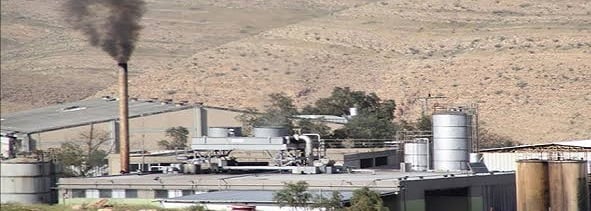
The ‘National Bureau for Defending Land and Resisting Settlements “ stated in its latest weekly report , that the Israeli Occupation State began establishing industrial zones in settlements across the West Bank gradually, and in the late 1970s, it initiated the work in the ‘Barkan Industrial Complex’ in Salfeet Governorate as part of the ‘Allon Plan.’ The establishment and expansion of these zones accelerated significantly during the 1990s, with the ‘Mishor Adumim Industrial Zone established in 1993. This policy has continued to the present, serving to consolidate Israeli control over Areas ‘C’. noting that more than 25 such industrial zones currently operate across the West Bank, and the occupation plans to increase their number to about 35.
Within the context, on Nov. 9, 2026, the Israeli Authorities approved the establishment of an industrial zone south of Hebron. The approval followed the signing of a document defining the boundaries of the new industrial zone, named ‘Mabuot Lachish,’ by Avi Blot, commander of the Israeli military’s Central Command, under pressure from and following coordination with the ‘Settlement Administration,’ the Civil Administration, and Minister Smotrich.
The announcement came just days after Israeli occupation forces sealed off and isolated the Palestinian industrial zone in the neighboring town of Beit Ula with earth mounds on Nov. 4, 2026. These developments form part of a broader wave of settlement expansion, which also included the laying of the foundation stone for another industrial zone, ‘Bostani Hefetz,’ near Tulkarm on Nov. 12, 2026.
Smotrich described the approval as coinciding with efforts to advance plans for the construction of more than 60,000 settlement units across the West Bank, added that the new industrial zone aims to strengthen the Israeli presence in areas adjacent to the Green Line and provide employment opportunities and sources of revenue for settlement councils. He added that the project is also intended to reinforce security control over the area and protect nearby Israeli roads and cities, including Kiryat Gat and Highway 6, against those advocating the establishment of a Palestinian state.
For his part, Yaron Rosenthal, head of the Gush Etzion Settlement Council, said that the new industrial zone would generate more than NIS 100 million annually for the council. The new industrial zone covers an area of more than 3,039 dunums of Palestinian land situated between the towns of Tarqumiya, Beit Ula, and Nuba, as well as the Adulam area, north of the Tarqumiya crossing in the western part of Hebron Governorate.
The stated objective, however, is to strengthen the settlement presence and integrate settlements into an economic infrastructure that serves settlement councils. This is facilitated by tax incentives and infrastructure funding that exceeds the levels available within Israel by 50%, with the aim of attracting investment. Other objectives include reinforcing security control and protecting nearby Israeli roads and cities, such as Kiryat Malakhi / Lachish and areas surrounding the Green Line. Ultimately, this approach seeks to turn settlement expansion into an economic lever that contributes to erasing the 1967 borders and imposing a fait accompli that restricts any future prospects for a political solution, as highlighted in several reports.
At the same time, the occupation authorities approved the establishment of a second settlement industrial zone, named ‘Bostani Hefetz,’ covering about 800 dunums between the lands of the villages of Shofa, Faro’on, and Jbara, south of Tulkarm. The project has raised concerns over its potential impact on agricultural land and the geographical contiguity between Palestinian villages. The Northern West Bank Settlements Council announced the laying of the foundation stone for the new industrial zone near the ‘Avnei Hefetz settlement,’ which was built on lands belonging to the villages of Shufa, Kafr Al-Labad, and Al-Hafasi.
The impact of establishing this project extends beyond the area of land confiscated to affect surrounding villages and agricultural lands, as well as severing the Kafriyat area from its surroundings. The main road leading to the towns and villages of Kafriyat passes through the site designated for the new project, potentially preventing farmers from accessing their lands. Work on the project began about 4 years ago, during which local protests led to its suspension.
However, the occupation authorities took advantage of the current circumstances and the war on Gaza to resume construction, including building retaining walls and opening internal roads throughout the area. The industrial zone is connected to a surrounding area that includes the ‘Beit Hefer settlement,’ a military checkpoint, and an electricity substation. According to experts, this could consolidate these sites into a single settlement bloc, encircling the village of Shufa within an expanding network of settlements.
The ‘Bostani Hefetz’ project is part of a broader policy of establishing settlement industrial zones across the West Bank, through which the occupation authorities seek to integrate settlements into an economic infrastructure that goes beyond residential expansion and security considerations. These industrial zones serve as an economic driver for the settlement enterprise, having expanded and evolved into a major factor in attracting settlers by offering opportunities to live and work in close proximity. In particular, these zones acquire land by force at preferential prices compared with those available inside Israel, in addition to benefiting from easier access to bank loans, tax exemptions, and other incentives that help boost economic activity in settlements.
Data reveal significant variations in the sizes of settlement industrial zones spread across the West Bank. The ‘Shahak Industrial Zone’ in Jenin covers about 8,000 dunums, while the ‘Sha’ar Shomron Industrial Zone,’ located on both sides of Highway 5, east of Ras Al-Ayn ‘Rosh HaAyin’ and near the settlements of ‘Alkana and Oranit,’ covers about 2,700 dunums. The ‘Meitar Industrial Zone,’ extending along St. 60 and the Armistice Line, lies immediately north of the Meitar crossing, opposite Khirbet Zanuta and south of the town of Al-Dhahiriya in Hebron Governorate. It covers about 2,000 dunums.
Meanwhile, the ‘Atarot and Mishor Adumim industrial zones cover about 1,530 and 1,550 dunums, respectively. The former is located on the northern outskirts of East Jerusalem, near the Qalandia Military Checkpoint and along the Jerusalem – Ramallah St. 60, and is separated by the Apartheid Wall from Palestinian population centers to the north, east, and west. The latter lies in the eastern Jerusalem wilderness, about 7 – 10 km east of Jerusalem, along Highway 1, which leads to the Dead Sea and Jericho.
As settlement industrial projects expand from Tulkarm in the north to Hebron in the south, specialists argue that these zones have become part of a broader economic structure designed to consolidate settlement expansion by linking settlements to industrial, commercial, and agricultural interests and strengthening their capacity for continued growth.
This expansion raises growing concerns about its implications for Palestinian land, the environment, and the local economy. Another major example is the ‘Barkan Industrial Zone, one of the oldest and largest settlement industrial zones in the northern West Bank. Located in Salfeet Governorate, adjacent to the ‘Barkan and Ariel’ settlements and along Highway 5, it comprises more than 120 factories and companies.
The risks posed by these and other industrial zones spread across several West Bank governorates are considerable and multifaceted. They include political risks, particularly the erosion of the Green Line separating the West Bank from Israel, as well as economic risks stemming from the appropriation of Palestinian land, preventing Palestinians from accessing, utilizing, and developing their properties within essential development plans, and undermining opportunities for the growth of Palestinian industry. These zones also exploit low-cost Palestinian labor to build a parallel economy that competes with and undermines the Palestinian economy.
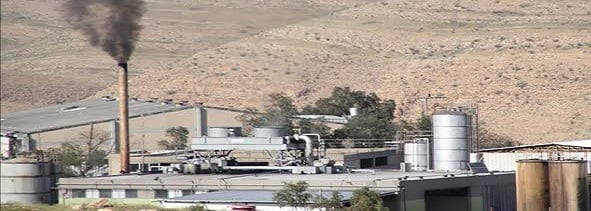
In addition, they pose serious environmental and public health risks. These include relocating polluting industries, chemical plants, and other heavy industries away from population centers inside Israel, while exposing surrounding Palestinian communities to their environmental consequences. Industrial waste and wastewater discharged by these factories can contaminate agricultural land and groundwater in nearby Palestinian villages, posing a direct threat to public health.
Amid the expansion of settlement activities, 6 announcements published by the occupation authorities between Oct. 12 and Nov. 13, 2026, revealed plans to allocate 13,119.78 dunums of Palestinian land for various purposes, including grazing, engineering facilities, and the processing of agricultural products. The designated areas extend across a geographical corridor from east of Ramallah to the northern Jordan Valley and Qalandia, north of occupied Jerusalem.
According to the Wall and Settlement Resistance Commission, the total area is distributed across 4 grazing notices covering 12,356.07 dunums, one notice allocating 584.17 dunums for engineering facilities in the Fara Valley, and another designating 179.54 dunums for agricultural product processing in Qalandia. The land targeted includes areas in Fasayel and Kafr Malek under Notice no. 203033181, published on Nov 10, which allocates 5,545.26 dunums for grazing. In this regard, a report by the Israeli Peace Now indicates that most of the land lies within an area declared for military training, while part of it is also covered by an order for the construction of the separation wall in the northern Jordan Valley.
These indicate the use of military measures alongside ostensibly civilian land allocations in ways that serve the settlement project, in an area where Palestinian communities already face sustained pressure on housing, grazing, and movement. The plans are not limited to grazing land; they also extend to water resources. They are linked to two water reservoirs with a combined capacity of 2.5 million cubic meters, intended to supply irrigation for date-palm plantations and support the expansion of settlement agriculture.
At the same time, the Israeli occupation army issued a military order putting hand on land in 5 villages west of Nablus and east of Qalqila: Al-Funduq, Immatin, Jinsafut, Hajja, and Kafr Qaddum. The lands and locations covered by the military order include Hajja: Al-Radi, Al-Bursan, Al-Suhail, Abu Shahma, Al-Ma’jarfa, Al-Jabeen, Tabsur, Bir al-Bayda, Al-Naql, and Al-Muhaide. Al-Funduq: Al-Bab, Karm Al-Sadr, Baqi’ Al-Sheikh, Al-Qusayb, Akkur, and Khalil Zeid.
Immatin: Wadi Al-Sheikh Ubeid, Al-Aqab, and Kuffat Abu Salim. Jinsafut: Hinnat Al-Ful, Wadi Khaled, Hareeq Seif, Bir al-Kaboush, Hareeq Salim, Al-Jubeil Al-Gharbi, Bir Al-Badiya, Qa’dat Al-Haiba, Al-Shari’a, Muharrib, Kuffat Al-Aliqa, Qatin Al-Arous, Al-Halla, and Al-Mashour. Kafr Qaddum: Wadat Hamdan, Al-Shaqaq, Khallat Al-Tifl, and Al-Jazir. The total area of land covered by the military order is approximately 377 dunams. The order remains in force until December 31, 2028.
On the 9th of this month, the Ministry of Housing and the Civil Administration also published tenders for the construction of 823 settlement housing units: 732 units in the ‘Gva’ot settlement,’ west of Bethlehem, and 91 units in the ‘Oranit settlement,’ south of QalqilIa. These come in addition to tenders for the construction of 2,944 housing units that had been published during the election period. This brings the total number of settlement housing units put out to tender since the Knesset was dissolved on July 18, 2026, to 3,767.
These tenders represent the implementation stage of settlement construction plans. Once the Higher Planning Council approves a plan, the Ministry of Housing, in cooperation with the so-called ‘Custodian of Government Property,’ issues tender inviting contractors to submit bids for the rights to construct and market the project. Once the winning bid is selected, the contractor can apply for a building permit from the local authority, after which construction work can begin. The process, from the issuance of the tender to the laying of the foundation stone, typically takes between one and two years.
In addition to these developments, the Occupation Authorities are planning to establish a new settlement city, provisionally named ‘Ras Al-Ein’ east ‘Shira,’ on an area estimated 16,000 dunams between the city of Ras Al-Ain and the ‘Gush Maaraba settlement bloc.’ The latter includes the settlements of Elkana, Oranit, Sha’arei Tikva, and Etz Ephraim, west of Nablus and Salfeet.
The proposed project reportedly includes approximately 60,000 settlement housing units and is expected to accommodate more than 200,000 settlers, making it one of the largest settlement projects planned in the northern West Bank. Efforts to advance the plan have been underway for two years, through cooperation between the Northern West Bank Settlements Council, the Israel Land Authority, and the Ministry of Finance.
The project forms part of a broader settlement plan aimed at accommodating ‘1,000,000 settlers in Samaria,” spearheaded by Yossi Dagan, head of the Northern West Bank Settlements Council. The broader plan envisages the establishment of new cities and settlements, alongside the development of railway networks, hospitals, and industrial zones. He described the proposed city as a security and strategic measure, claiming that it would create a settlement belt to protect cities in central Israel and connect settlements in the northern West Bank to the greater Tel Aviv area.
List of Israeli Assaults over the Last Week Documented by the National Bureau:
Jerusalem:
- Establishing an outpost near the Mikhmas town, close to local residents’ homes and residential neighborhoods, following days of excavation and land-clearing operations in the area using heavy machinery.
- Forcing 2 Jerusalemite brothers, Omar and Shadi Ibrahim Amira, to self-demolish their homes in the town of Sur Baher, citing a lack of building permits. Similarly, brothers Jihad and Luay Muhammad Salama Shuqairat were forced to self-demolish their homes in the Jabal al-Mukabbir town, and a Jerusalemite resident, Muhammad Fakhri Abu Diab, was compelled to self-demolish his home in the Al-Bustan Neighborhood.
Hebron:
- Suffering from suffocation after inhaling gas fired by settlers inside the home of citizen Moh’d Musa Shanaran in Masafer Yatta, a child, two women, and two young men were reported, then admitted to Yatta Governmental Hospital, where medical sources described their injuries as moderate.
- Burning a vehicle and a water tank, set fire to property, and demolished parts of the second floor of citizen Shanaran’s house, which was under construction?
- Attacking olive pickers from the Al-Jabareen family in the Wadi Ma’in area and severely beat them under the protection of occupation soldiers, who detained a number of them for about an hour, while others attacked olive pickers from the Shatat family in the Igziwa area in the town of Carmel.
- Cutting down about 70 olive trees and wrote hostile slogans on citizens’ property, in the Igziwa area in Musafer Yatta, Ta’id, belonging to citizen Zuhair Fansha, and they wrote hostile slogans on citizens’ property in the area, while others began establishing a new settlement outpost on citizens’ lands in Khashm Draj in the eastern desert, southeast of Hebron.
- Handing over orders of the cessation of work on a residential building for the Al-Falah family, and the office of the Abu Zeina family in the Farsh Al-Hawa area. They were also notified of the demolition of a villa and 65 residential apartments in the city of Hebron, even though the notified buildings had the necessary licenses from the Hebron Municipality.
Bethlehem:
- Firing live bullets at the olive pickers in the village of Abu Injim, on land owned by the brothers Aziz, Saber, and Tawfiq Abdel Harimi, while the occupation forces immediately stormed the area to provide protection and support to the settlers, and fired toxic tear gas bombs heavily towards citizens while they were working on their land, causing a number of them to suffer from suffocation, before the occupation soldiers forced them at gunpoint to leave the land and prevent them from returning to it again.
- Attacking the townspeople while they were working to pick olives in the Wadi Seif area, and assaulted them, wounding five citizens in the Beit Fajjar town.
- Storming the Wadi Rahal village and stationed themselves in the vicinity of the girls’ secondary school, amid provocations that sparked a state of panic and fear among the citizens and the students.
Ramallah:
- Sustaining bruises after being severely beaten by a group of settlers in the village of Barqa, the child Omar Khattab Samreen, 14, and his 47 year old father were injured, while they were on their way to pick olives, attacked them and severely beat them with sticks until they lost consciousness.
- Setting up a tent in an area that the occupation army declared a closed military zone and prevented Palestinian citizens from reaching it in the Al-Mughayir Plain, while settlers are allowed to enter and reside there.
- Injuring a number of citizens in the town of Atara, sustained bruises and fractures while confronting a large-scale settler attack, estimated at no less than 400 settlers who participated in the attack. The attack targeted about 10 homes, and led to damage to five vehicles in the town of Silwad,
- Attacking a young man near the Iron Gate established between the town of Silwad and the neighboring village of Deir Jarir. They also attacked olive pickers in the Wadi al-Zaytoun area west of the Silwad town, seized their vehicle keys and mobile phones, and stole their crop.
- Burning a tent in a Bedouin gathering near the village of Deir Qadis in the Maghayir area, while others stole olives from the lands of the village of Um Safa.
- Stealing 70 sheep in the eastern area of the Deir Dibwan town, belonging to the citizen Majeed Abdel Hadi.
Nablus:
- Setting fire to a number of citizens’ homes in the village of Jalud in a new attack that targeted their property and homes. Others also burned a vehicle garage in the village of Al-Laban Al-Sharqiya during a large-scale attack on the village.
- Attacking and assaulting olive pickers in the Khallet Abu Hawan area in the town of Beit Dajan, and forced them to leave their lands, after stealing equipment and mattresses they were using to pick olives.
- Chasing a number of young men in the Jabal Rujib area, east of the city, beat them, seized their mobile phones, and attacked their vehicle.
- Attacking the home of citizen Muti’ Salim Qatish and destroyed 2 vehicles belonging to another citizen in the vicinity of the area in the ‘Al-Harayeq’ area in the town of Beita.
- Notifying of the demolition of 2 houses and agricultural barracks in the eastern area of the village of Iraq Burin.
Salfeet:
- Stealing a vehicle in the Wadi Al-Shaer area between the village of Al-Laban Al-Sharqiya and the city of Salfeet, while the occupation forces began demolishing the two-story house of citizen Hamad Marwan Naji in the town of Kafr Al-Dik on the western side of the town, in addition to demolishing a water well.
- Handing over 3 demolition orders in the Bab Al-Marj area, east of the town of Deir Ballut, west of Salfeet. They confiscated a water pump from an artesian well belonging to the municipality of Bidya, and demolished commercial shops near the entrance to the village of Haris, owned by the citizen Fadi Hassan Saleh Kulaib.
Jordan Valley:
- Poisoning 13 sheep as a result of settlers spraying toxic substances in an area located west of the town of Al-Auja, north of the city of Jericho. The owner of the sheep, citizen Suleiman Malihat, reported that settlers sprayed toxic substances in the area where his sheep were located, which led to their death.
- Preventing citizens from grazing their livestock after they stormed the community in the areas surrounding their tents. A group of settlers also attacked citizens’ property in the Ras al-Ahmar area, vandalized solar energy systems in a number of communities, and tore down the curtains of some tents. They also attacked barracks belonging to Palestinian families who had previously been forced to leave due to repeated settler attacks.
- Killing female citizen Fath’a Fahidat, 60 as a result of settlers firing live bullets at her, and 10 other citizens were injured. The settlers surrounded Palestinian homes and fired live bullets at the citizens.
- Destroying agricultural irrigation networks near the village of Ain Al-Bayda, where a group of settlers attacked agricultural lands near the village and destroyed the irrigation networks used to irrigate agricultural crops, which led to their complete destruction and disruption of water access.
- Demolishing greenhouses belonging to Saed Ahmed Sawafta in the village of Bardala, noting that the total area of land on which they are located is about 23 dunums.