Settlement Weekly Report
By: Madeeha Al-A’raj
14 – 21 Nov. 2025
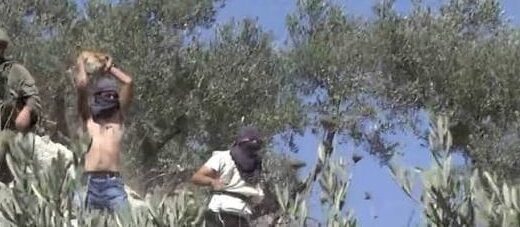
The ‘National Bureau for Defending Land and Resisting Settlements stated in its latest weekly report , that in the occupied West Bank, developments are moving fast, the security situation is deteriorating day by day, and settlers’ terrorist acts against Palestinian citizens are escalating, as the olive harvest season this year witnessed the worst wave of terror, according to the Israeli Yediot Aharonot Newspaper, Israeli security organizations’ data reported that 1,586 incidents of Jewish nationalist violence during the 2 years of the Gaza war were registered, averaging 2 incidents per day. There were also 114 attacks carried out by Jews against the Israeli army, border police, and other police forces.
According to the security organization, there has been an increase of between 20% and 25% in the number of incidents compared to last year. The occupation army relieved that the Shin-Bet ‘Israel Security Agency’ at least remains committed to combating the phenomenon of Jewish terrorism, and is not whitewashing these events under the pretext of criminal offenses or an unacceptable educational phenomenon that should be addressed through media and education, as is required and implemented by the government, which has appointed a ‘project manager’ for the ‘Hilltop Youth’ as an alternative to canceling administrative detention orders. The data also showed that since the beginning of this year, 174 Palestinians have been injured in nationalist crime incidents, an increase of 12% compared to last year, and in total, 376 Palestinians have been injured in such incidents since the beginning of the war.
Israeli NGOs and human rights organizations, such as Peace Now and the Israeli Information Center for Human Rights ‘B’Tselem’s reports along with similar reports from international bodies like the OCHA have increasingly highlighted settler violence, which has crossed all boundaries. This violence has even prompted US Secretary of State Marco Rubio to express concern that the latest wave of violence perpetrated by Israeli settlers in the West Bank could undermine the US-backed ceasefire efforts in Gaza, in addition, EU countries have condemned the violence and called on the occupying power to stop it.
This led Israeli PM Netanyahu to break his silence last Monday and announce that he would convene an emergency cabinet meeting to ensure that the Israelis behind the attacks against Palestinians in the occupied West Bank are brought to justice. He emphasized that he is following the violent unrest with grave concern, describing it as an attempt by a small, extremist group -in a previous statement – to take the law into their own hands ‘and as he put it to take justice into their own hands’, he also pledged his support to the army and security forces. We will continue to work firmly and fearlessly to maintain order to the fullest extent permitted by the law.
He broke his silence not to protect Palestinians, but because a ‘small, extremist group’ clashed with the occupation army during the recent horrific events in the Jaba’a village in the Bethlehem Governorate, attempting to appear as if he is washing his hands of the settlers’ crimes. Perhaps Netanyahu has forgotten or is feigning ignorance of his true position on settler terrorism. Just a year ago, on August 28, 2024, he declared that he viewed ‘with grave concern’ the sanctions imposed by the US on Israeli settlers for committing acts of violence against Palestinians in the West Bank, and that the matter was under discussion.
The Israeli Minister of Army, Katz was even more explicit than his boss, attempting to distance himself from settler violence, following clashes with the army, which coincided with a settler attack on Jaba’a, he asserted that the government would continue developing and expanding settlements throughout Judea and Samaria i.e. (the occupied West Bank) in cooperation with the settlement leadership, while maintaining law and order, ensuring the security of residents, and preserving regional stability.
He declared that he would not tolerate attempts by a handful of violent anarchists and criminals to take the law into their own hands and tarnish the reputation of the settlers, nor would he allow them to harm soldiers or divert forces from their duties of protecting Israelis and thwarting Palestinian terrorism. However, he quickly backtracked, announcing, ‘our government will continue to systematically develop and expand settlements in the West Bank.
We refuse to reissue administrative detention orders against settlers from the ‘Price Tag and Hilltop Youth Groups.’ Worth recalling that Katz refused to condemn the attacks carried out by settlers against Palestinian civilians in the Palestinian town of Duma in Bethlehem. In Nablus, they opened fire on citizens and set fire to property and vehicles in a terrorist act. In his response to a question about that attack, Katz said on April 3, ‘I don’t consider this as terrorism.’
Israeli military officials in the Central Command are also trying to distance themselves from settler violence. According to the Newspaper, the wave of settler violence emanating from outposts and grazing farms has reached a dangerous level, prompting brigade commanders to demand that Chief of Staff Eyal Zamir reinstate the administrative detention orders that Katz has revoked a few months earlier. Army officers warned that the violence they sometimes face isn’t only perpetrated by local settlers, but also sometimes involves support or direction from politicians and ministers, hindering law enforcement and pitting soldiers against government officials, who defend the settlers.
Within the context, Ahronot also noted that the commander of the Israeli army’s Central Command, Avi Blot, boasts of having established about 120 ‘farms’ unauthorized outposts that are considered illegal because settlers establish them without official permits or authorization. An officer told the newspaper that ‘hundreds of ‘farms’ have been connected to infrastructure at a cost of billions of shekels, and the Israeli army remains silent and sends soldiers to help establish and guard them, even though these are illegal settlement outposts.’
The settlers, whom were described as ‘troublemakers’, call themselves, according to Israeli media, the ‘King David Brigades’, they are the same ‘Hilltop Youth’ who have left or been expelled from educational institutions and are known to the security organization. Indeed, these settlers, who carry out their brutal attacks against Palestinian citizens, operate in an organized manner. They have field commanders like Neria Ben-Bazi and many others, political figures like Bezalel Smotrich and Itamar Ben-Gvir, and religious figures like Rabbi Yitzhak Ginsburgh and other rabbis.
It is obvious that the violence and terrorism perpetrated by these settlers falls within the framework of this government’s plan to prevent the establishment of a Palestinian state – well-thought-out plan overseen by Smotrich and his executive arms in the Civil Administration. Here lie the settlement outposts and so-called pastoral farms, from which terrorist settlers launch organized groups, in the focus of achieving more than one goal. The first is to create geographical contiguity between the settlements that besieges Palestinian urban areas in a way that makes the state merely municipalities run by Palestinians under Israeli rule.
Anyone traveling through the West Bank recognize this from examples along the ‘Alon Road’ St. 578, 508, and 458’, the Jerusalem-Jericho road, where approximately 30 settlement outposts have been established. These outposts control the eastern slopes of the West Bank and the crossroads connecting the Jordan Valley with the Jordan Valley ridge, where the major Palestinian cities of Nablus and Ramallah are located.
They control checkpoints at the Hamra Junction ‘Tubas Governorate’, the Tapuah ‘Za’tara Junction’ ‘Nablus Governorate’, and the Rimonim Junction ‘Ramallah Governorate’, along road 60, which traverses the West Bank from north to south, from Jenin in the north to Hebron in the south, another 30 settlement outposts have been established. This allows for control of the Jordan Valley ridge and the ability to sever the geographical contiguity of the Palestinian territories in the West Bank, essential for a viable state.
Furthermore, five settlement outposts east of Elon Moreh, and 6 others east of Ramallah, connect isolated settlements, particularly in the Nablus and Ramallah-al-Bireh Governorates to the Jordan Valley. The eastern outposts of Itamar, and equally important, the advancement of bypass roads to these outposts and settlements, such as the Huwara bypass and others, for which NIS 7 billion have been allocated over the next 5 years ‘20% of Israel’s road development budget’.
In addition to creating a contiguous settlement bloc between Ariel in the Salfeet Governorate and the settlements of Eli and Shilo, located midway between Nablus and Ramallah, and from there to the Jordan Valley. Twenty-one illegal outposts have been established in this area.
Moreover, settlement activity is being strengthened in the southeastern Hebron Hills between the settlements of Ma’on and Susya, through 16 outposts, creating geographical contiguity between Gush Etzion and Jerusalem, and separating 5 Palestinian villages, Battir, Husan, al-Walaja, Nahalin, and Wadi Fukin, from Bethlehem.
As for the second objective, establishing these outposts and grazing farms, which numbered around 214 by the end of 2024, controlling 787,000 dunams of land and becoming breeding grounds for Jewish terrorist organizations targeting Palestinians, is to counter signs of the settlement enterprise’s erosion despite all government support. Despite the expansion of settlements in terms of the number of housing units, the phenomenon of reverse migration is sounding alarm bells within the political and security circles of the occupying state.
Data published by Shaul Arieli, director of the ‘Tamror-Politography center’, which specializes in security, politics, law, economics, society, geography, and diplomacy in Israel, showed that 60 settlements in the West Bank have recorded a negative migration balance in recent years. Arieli explains here that 60% of the settler population growth in the West Bank came from ultra-Orthodox ‘Haredi settlements’ such as Modi’in Illit, Beitar Illit, Ma’ale Adumim, Immanuel, Efrat, Beit Ha’arava, and Eli, but not from settlements that are supposed to be the face of the Israeli settlement project.
Sarcastically, this center’s study adds that the violence initiated by settlers to ignite the West Bank and exploit it to expel Palestinians is having the opposite effect. According to the figures, since the beginning of the year, 791 more settlers have left the West Bank than have moved there ‘a negative overall migration balance’, and 623 have left for Israel ‘a negative internal migration balance’. This trend is evident in the 4 cities that absorb the majority of the settler population ‘43%’: Modi’in Illit, Ma’ale Adumim, and Ariel.
On another level, the Civil Administration intends to confiscate 1,800 dunams of land belonging to the towns of Sebastia and Burqa, north of Nablus, under the pretext of developing the Sebastia archaeological site. This move includes the seizure of vast areas of olive groves. Residents have been given only 14 days to submit objections, according to a report in Haaretz last Thursday. This is the second largest land confiscation of its kind by the occupation authorities, following the confiscation of 286 dunams of land in Susya, in the Hebron Governorate, for the same purpose in 1985.
In May 2023, the Israeli government allocated NIS 30 million for excavations and development in Sebastia and began restoration work at an old train station nearby, in addition to allocating NIS 40 million to strengthen its control over archaeological sites in the West Bank. The archaeologists’ organization ‘Omek Shaveh’ considered that the government ‘under the guise of concern for heritage, is investing tens of millions of shekels in turning archaeological sites into a tool for displacement and annexation’, noting that ‘the intention to confiscate private lands is anything but preserving them, and its goal is to establish a tourist settlement that will wrest the heritage of Sebastia from its town and hybridize the region through tourists’.
List of Israeli Assaults over the Last Week Documented by the National Bureau:
Jerusalem:
- Attacking the Bedouin community of Al-Tabna, near Khan al-Ahmar, using stones and terrorizing children and women.
- Assaulting shepherds in the Bedouin communities of Abu Ghalia and Al-Ara’ara, near the Al-Kassarat area adjacent to the Anata town.
- Fixing mobile homes on a plot of land measuring about 6 dunams in Sur Baher.
- Notifying 4 families in Aqabat al-Khalidiya in the Old City of Hebron, that their homes would be demolished, claiming they were ‘uninhabitable’. The notices are part of a policy targeting Palestinian homes in and around the Old City.
- Demolishing a 100-square-meter house belonging to Raed Hajjaj Fahidat, claiming it was built without a permit in Anata.
Hebron:
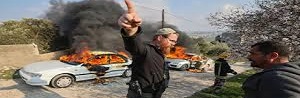
- Injuring a number of citizens, and burning a house and two vehicles in an attack by settlers, protected by Israeli occupation forces in the Sa’ir town. The settlers assaulted residents with clubs and sharp objects, injuring several women and causing significant property damage, prevented ambulances and fire trucks from reaching the Wadi Sa’ir area.
- Delivering demolition orders for homes, dwellings, and tents belonging to Palestinians in the villages of Jinba and Khirbet al-Halawa in Masafer Yatta, south of Hebron. Also on Wednesday evening, a Palestinian man, his wife, and their son were injured when they were attacked by a group of settlers northeast of Hebron while on their land in the Dhahr al-Hawiya area, near the bypass road 60, sustained various injuries.
Bethlehem:
- Attacking the Jab’a village, Bethlehem, setting fire to 4 vehicles and a caravan. They also threw Molotov cocktails at 7 homes, damaging their windows, wrote racist slogans on their walls, demanding that the residents leave the village.
- Burning a house and 2 vehicles and assaulted several residents in an attack on the Sa’ir town, Hebron.
- Carrying out acts of vandalism, using a tractor to plow land in the Minya village, Bethlehem, destroying crops.
- Issuing demolition orders for an inhabited house, another house under construction, an agricultural room, and a sheep farm in the village of Husan, Bethlehem.
Ramallah:
- Attacking 4 Palestinians near the Beitonia town.
- Storming the entrance to the Sinjil town, vandalized 4 vehicles.
- Storming the outskirts of the village of Al-Mughayyir in the Khala’il area, raided agricultural lands, and stole farming equipment belonging to residents of the village.
- Invading the Kafr Ni’ma village, blocked the entrance to the village with earth mounds.
Nablus:
- Attacking a Palestinian farmer in the Beit Furik town while he was working his land. They detained him for hours, vandalized his crops, and forcibly evicted him from his thyme field.
- Attacking a shop in the Deir Sharaf town, destroyed its contents after infiltrating the town, protected by Israeli occupation forces.
- Storming the village of Furush Beit and began demolishing a 120m2 house belonging to Atef Abu Jish. The house, located on the main road north of the village, is home to 5 people. It should be noted that the occupation forces had previously issued demolition orders for a number of houses in the area, as the village is facing a fierce campaign, with more than 90% of its homes facing demolition.
Jordan Valley:
- Storming the Hammamat Al-Malih ‘Springs’ in the northern Jordan Valley, raided residents’ homes, and detained them. They also attempted to break down the doors of the Al-Malih School there., and on the same day, they demolished a residential structure and 2 livestock pens in Al-Malih.
- Fencing off areas of land located near the Tayasir Military Checkpoint in the northern Jordan Valley. Part of the land belonging to residents, and the other to the Latin Patriarchate, closing off thousands of dunams to residents. Bulldozing land in the Al-Hadidiya area to establish a new settlement outpost.
Salfeet:
- Uprooting scores of olive trees in the Wadi Qana area of the Direstia village.
- Erecting 2 new iron gates near the entrance to Deir Ballut, one toward the Rafat village and the other to the Al-Lubban Al-Gharbiya village.
- Attacking farmers in the Deir Ballut town, beating them, and damaging their olive trees, spraying them with pepper spray, stealing money, and destroying their agricultural equipment.
- Torching 6 tourist villas under construction on Mount Tarouja, between the villages of Al-Lubban Al-Sharqiya and Ammuriya, south of Nablus, belonging to Khalil Abu Sneineh, and the guard of the villas sustained burns while trying to put out the fire.