
Settlement Weekly Report 12 – 18 Sept, 2026
By: Madeeha Al-A’raj
The ‘National Bureau for Defending Land and Resisting Settlements stated in its latest weekly report , that ahead of the 26th Israeli Knesset elections, settlement activities are intensifying through a series of new and destructive projects and plans. Within this context, the Israeli Authorities are set to open bidding on Oct. 25 for the construction of 2,167 settlement units under the ‘E1’ project, located between Jerusalem and the ‘Ma’ale Adumim settlement’. The date falls just 2 days before the Israeli elections, scheduled for October 27, marking a move to advance the marketing of all residential units approved under the project.
According to the organization ‘Ir Amim’, the Israeli Ministry of Construction and Housing updated the tender schedule last week, setting the bid submission period from Oct 25 – Dec. 21. Published tender documents confirm that the project comprises 2,167 settlement units, in addition to a separate tender issued by the occupation authorities on August 18 for the construction of 1,234 units. Together, the 2 tenders cover all 3,401 units approved under the E1 plans. The earlier tender was also issued ahead of the Oct. 27 elections. Meanwhile, a new date has been set for another tender to establish a commercial and business zone within the E1 area, covering about 1,355 dunams east of Anata, on the western side of the project area, the zone is planned to be accessible from the direction of Jerusalem. Bidding for the project is scheduled to open on Nov. 2 and close on Jan. 4, 2027.
In Jerusalem, the Occupation Authorities have also begun promoting a new settlement construction project in Ma’ale Adumim, east of occupied Jerusalem, the project entails building 750 new housing units across an area of 33 dunams, situated near the municipality building, the educational complex, and major transportation arteries in the center of the settlement. This initiative follows the Israeli government’s designation of the area for urban renewal, it involves demolishing 147 old housing units and 17 commercial shops to make way for the 750 new units, a move set to expand the scope of settlement construction in the area.
The project comprises a 31-story residential tower containing 170 units, 6 additional 26-story towers housing about 580 units, and a commercial hub spanning roughly 3,000m2. Implementation will occur in 2 phases: the first begins with the construction of the residential tower on vacant land purchased by the developer, while the second phase involves demolishing existing structures and building the remaining residential towers.
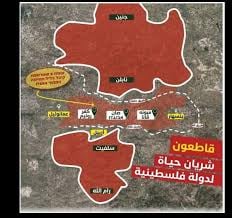
Meanwhile, work is underway on a new settlement project, which the Occupation Authorities have dubbed the ‘Crimson Thread’. The project stretches south from the Ein Shibli area in the Nablus governorate, about 16 km east of Nablus city, to the Tayasir checkpoint north of Tubas, covering extensive agricultural lands owned by Palestinian residents of Tammon, Tubas and Atuf. The project is being implemented following a series of military orders that authorized the seizure of 1,042 dunams of Palestinian-owned land under the pretext of military and security purposes. The project’s route serves as a link between the ‘Moshe Sharvit Farm and the Tzvi Ofarim’ settlement outpost in the northern Jordan Valley.
The Occupation Authorities announced the project in 2025, which combines a military road with a network of security barriers, including trenches, barbed wire, security fencing and, in some sections, electronic surveillance systems. Concerns are particularly acute in the area stretching between the town of Tammon and the northern Jordan Valley, one of the last remaining open areas in the part of the West Bank classified as Area C under the Oslo Accords. According to the Israeli news website Siha Mekomil, the area encompasses 50,000 dunams of open land, green spaces and mountains. As a result, the establishment of effective Israeli control over the area would mean opening it up to settlers and potentially forcing Palestinians to leave their land.
This project has shifted from the planning stage to rapid on the ground implementation, its critical nature stems from the fact that it cuts through the Al-Buqai’a Plain, one of the most vital agricultural regions and ‘food baskets’ of the northern West Bank. The area is linked to a network of Palestinian villages and towns, such as Atuf and Tammon, and serves as a crucial zone for shepherds and livestock herders who rely on these open spaces for their livelihoods. Furthermore, control over this area grants access to the Eastern Aquifer, the second-largest water basin in the West Bank, thereby giving the occupation absolute control over water resources. This deprives thousands of dunams of orchards and seasonal crops of water, forcing farmers into displacement as their sources of livelihood dry up.
As for the new settlement activities, Hebrew media reported that the Occupation Authorities opened a new settlement called ‘Ma’ale Arogot’ within the ‘Gush Etzion’ settlement bloc located between the cities of Bethlehem and Hebron. The opening ceremony took place in the presence of a number of Israeli ministers and members of the Knesset, including FM Bezalel Smotrich, Zeev Elkin, minister in the Cabinet for Political and Security Affairs, and Amichai. Shekli, Minister of the Diaspora and Chairman of the Knesset Foreign Affairs and Security Committee, Boaz Bismuth.
The settlement is the third to be established within a week, and comes after the opening of the ‘Makeda’ – ‘Duran’ settlement northwest of Hebron, and the ‘Noa settlement’ southeast of Jenin. In this regard, the head of the Regional Council of the ‘Gush Etzion bloc’, Yaron Rosenthal, said, the new settlement was established on an axis linking the western and eastern parts of the bloc with the aim of strengthening the settlement presence and establishing geographical continuity between its parts.
In addition to all this, following the announcement by 12 Western countries of trade restrictions on settlements and their call for Israel to immediately halt settlement expansion and settler violence, the Israeli Civil Administration’s Settlement Subcommittee began considering 3 settlement projects in the occupied West Bank. According to a report prepared by Bimkom – Planners for Planning Rights, the 3 plans comprise a total of 747 settlement units in ‘Yitav West’, northwest of Jericho, ‘Ma’oz’, southwest of Jenin; and ‘Adi Ad’, south of Nablus, on land belonging to the villages of Jalod, Qariot and Al-Mughayyir.
Plan no. 320/6 for the establishment of the ‘Yitav West settlement’ in the Jordan Valley that covers about 200 dunams, the plan includes the construction of 281 settlement units less than 100 meters from the existing ‘Yitav settlement’ and adjacent to the area where the Palestinian community of Ras Ein Al-Auja once lived. Residents of the community used the land covered by the plan for grazing and agriculture. Ras Ein Al-Auja was the largest Palestinian pastoral community in the occupied West Bank until its residents were forced to leave the area in late Jan. 2026 following sustained settler violence and pressure
Within the context, Israeli data has revealed the expanding reach of settler pastoral farms across vast areas of the West Bank. These farms have become a primary tool for extending Israeli control over open spaces, now dominating more than 1.1 million dunams of land. The number of these farms and their associated outposts continues to grow; their role extends beyond mere agricultural activity, serving instead as a means to establish a permanent presence across large swathes of territory through grazing, road construction, and the linking of farms and outposts to surrounding areas.
This trend is part of a broader settlement expansion in the West Bank, marked by the establishment of 185 new outposts over 3 years, the advancement of plans for about 40,000 settlement housing units, and the construction of over 223 km of roads, according to the latest reports from B’Tselem. Details regarding a map published by the ‘Farms Union’, an entity established in 2024 with political backing and direct funding from Israeli government ministers, most notably Smotrich, to serve as the organizational, financial, and security umbrella for these farms, indicate that the area in question exceeds 1.1 million dunams, according to B’Tselem’s estimates.
On another hand, a report by Tel Aviv University’s Institute for National Security Studies ‘INSS’ warned that settler violence in the occupied West Bank is no longer merely a local law-enforcement issue, but has evolved into what it described as a ‘clear strategic threat’ to Israel’s security, governance and institutions. The report attributed this development to escalating attacks, weak law enforcement, the absence of political backing for security agencies, and growing links between settlement outposts, land control and the displacement of Palestinians.
It argued that the combination of weak enforcement, a lack of political support for the military, the Shin Bet and the police, and weaknesses in the judicial and law-enforcement systems has created a ‘state of lawlessness’, undermined recognition of state institutions and eroded the state’s monopoly on the use of force. The report went so far as to say that the absence of a firm response to the phenomenon “constitutes evidence that this is a policy directed from above.’ It warned that allowing the trend to continue could expose Israel to intertwined security, social, political and international risks.
This warning follows the recording by various occupation security agencies during the first half of 2026 of 660 incidents classified as ‘Jewish nationalist crimes’ – a reference to Jewish terrorism. This represents a 63% increase compared to the second half of 2025, when 405 attacks were recorded, and a 50% increase over the corresponding period of the previous year. The report described this trend as a ‘moral stain’, adding that the issue extends beyond the moral dimension to a disregard for the resulting security, political, and international repercussions.
It cited the commander of the Israeli army’s Central Command, Avi Bluth, who stated in messages to and meetings with political leaders that the violence ‘doesn’t occur in a vacuum and is fueled by public backing.’ Meanwhile, army assessments indicate that the failure of rabbis, settler leaders, and politicians to clearly condemn such violence lends legitimacy to extremists.
According to the report, an analysis of law-enforcement data concerning settlers in the West Bank between 2005 and 2025 found that about 94% of investigations opened into ideologically motivated offenses were closed without indictments, while only about 3% of all cases resulted in convictions. The report also examined the role of regional defense battalions and armed standby squads, which include settlers serving as reservists in their residential areas. It argued that their extensive activities blur the boundaries between civilian life and military duties.
Thus, the report called for regional battalions to be placed fully under the authority of the state and the military, and for them to be prohibited from independently participating in law-enforcement operations, confrontations or ideological activities outside the military chain of command. It also called for the confiscation of weapons, vehicles, equipment, communications devices and other matériel provided by the state from individuals against whom there is evidence of using such resources to attack military personnel or Palestinian civilians, as well as for criminal or disciplinary proceedings to be initiated where necessary.
List of Israeli Assaults over the Last Week Documented by the National Bureau:
Jerusalem:
- Establishing a new outpost on the lands of the Beit Iksa village, northwest of Jerusalem, specifically in the Khirbet Al-Alawna area, marking the second such outpost in the village within 4 months, they began installing structures and equipment there in a move aimed at imposing a new reality on the village’s land.
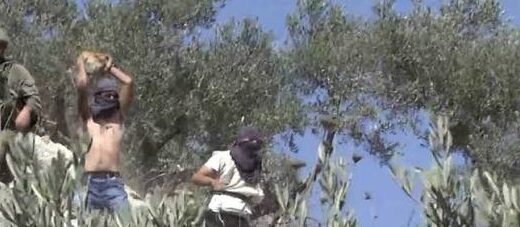
- Encroaching upon local residents’ land by cutting a fence, driving sheep in to graze among the olive trees, and pumping water from a local well onto the ground in an attack targeting residents’ land, water sources, and property in the Urqan Shariqa area of the town of Mikhmas.
- Dumping unknown substances and objects into a water well, threatening to contaminate the water source relied upon by residents of that community and surrounding Bedouin settlements for their basic needs and livestock in the Bedouin community of Bir al-Maskoub, east of Jerusalem.
- Bulldozing land in the Hizma town, especifically in the ‘Tablas area’ south of the town, to pave roads for military purposes, they also demolished 8 makeshift structures and bulldozed land in the town, uprooting olive trees and destroying solar energy systems in the Tablas area.
- Demolishing 2 houses belonging to the Abu Mayala and Alqam families in the Beit Hanina town, specifically the Al-Ashqariya Neighborhood, furthermore, demolition orders were issued for several shops and residential buildings in the Qalandia area, including commercial outlets and apartment buildings along Airport Road north of Jerusalem, on the grounds of lacking building permits.
Hebron:
- Cutting the electricity cable supplying the ‘Wadi Al-Rakhim area’ near the Yatta town, south of the governorate, which led to a power outage in the area, while others from the Havat Ma’on settlement burned a residence and an agricultural room for the citizen Khalil Shehdeh Rabi’.
- Writing racist slogans on the walls of citizens’ houses, in the Al-Tuwanah village in Masafer Yatta, and in the Al-Dhaqa area located far southeast of Hebron, and building new settlement road to facilitate access to settlement outposts in the region and controlling vast areas of land and pastoral wells, while preventing people from accessing them.
- Forcing Issa Musaf and his family to vacate and leave their house in the Huwara East area, knowing that they had expelled them from the place 2 days ago, following settlers’ attempts to control the house during the past days.
Bethlehem:
- Attacking Abu Ramzi Khalif, suffered bruises after settlers attack them in the village of Abu Injim, southeast of Bethlehem. The settlers attacked a house near the university housing and assaulted its residents, which led to the injury of the elderly person Khalif and his wife.
- Uprooting barbed wire surrounding lands in the village of Al-Rashaida, east of the Beniyah Sahba area, north of Al-Rashaida, between Al-Rashaida and the ‘Ma’ale Amos settlement, which belonged to citizens of Al-Rashaida and Al-Ta’amra.
Ramallah:
- Opening fire on citizens in Al-Mughayir village after the citizens attempted to repel a settler attack that targeted a poultry farm east of the village. The citizens tried to prevent them, so the settlers opened fire on them, and confrontations broke out, before the occupation forces intervened to disperse the citizens with toxic tear gas and protect the settlers. Moreover, 2 citizens from the village were injured after settlers attacked them on the Al-Marajat road between Ramallah and Jericho.
- Bulldozing citizens’ lands in the eastern and western regions of Al-Mughayir and opened closed roads to facilitate the movement of settlers during their attack on the village.
- Injuring a young man as a result of an armed attack carried out by settlers on him, which resulted in him sustaining wounds and bruises, after which he was transferred to receive treatment in the Zarqa area in the village of Bitello, west of the city of Ramallah. In the village of Umm Safa.
- Expanding a settlement outpost in Wadi Al-Zaytoun and in the Al-Mazraa. Al-Gharbiah town, and bulldozed agricultural lands.
- Steeling 300 sheep, and horses from the farm of Youssef Fawaz Awawda, in the Al-Hayan area in the Deir Dibwan town, and in the neighboring village of Ain Yabrud.
- Releasing their sheep near citizens’ houses before the residents confronted them and expelled them in the Zarqa area in the village of Bitello, west of the city of Ramallah.
- Attacking the village of Barqa and set fire to a number of facilities.
- Expanding a settlement outpost on Tal Al-Asour in the village of Kafr Malik, where they continued the bulldozing work and erected new facilities to expand the settlement outpost.
- Building a new settlement road in the Zabad area to the west, on an area estimated at 70 dunams planted with olive trees, in order to establish a new settlement outpost adjacent to the Apartheid Wall, in the Ni’lin town.
- Beating a young man while he was in the Al-Jiz area, near the village of Deir. Ghasana which led to him sustaining various wounds and bruises.
Nablus:
- Attacking citizens’ houses in the Al-Dhahra area in the town of Beita and the Al-Hara Al-Tahta Plain, protected by occupation soldiers, and stole a number of sheep heads. While others set fire to the plain of the Beit Furik town, near the military checkpoint erected by the occupation forces on the town’s lands, which led to the burning of crops, causing losses to the town’s farmers, and the rise of flames and smoke from the targeted lands.
- Destroying electricity poles in the new suburb of the Burin village, causing damage to the area’s infrastructure, in light of the escalation of settlers’ continued attacks on citizens’ property.
Salfeet:
- Attacking the houses of citizens in the village of Yasuf, in the Al-Nasba area east of the village, while 2 citizens, Moh’d Darwish and Nasha’t Shtayeh from Salfeet were injured and bruised after settlers attacked them while they were on their agricultural land in the Wadi Al-Shaer area, and in the western area of the town of Deir Ballut, the occupation forces began demolishing a herding community inhabited by more than 20 Palestinians for more than 20 years, noting that the residents of the community owns about 1,000 heads of sheep, which threatens the livelihoods of the families residing there, amid fears of their displacement and emptying the area of its residents.
Jenin:
- Grazing their livestock on citizens’ lands of the Faqo’a village, which prompted the people to confront them and try to prevent them from attacking the lands, and fired at the citizens, wounded one of them with a bullet in the foot.
- Raising occupation flags over the house of citizen Firas Moh’d Lafi Aliyat, in the Deir Abu Daif town, which was under construction. Aliyat received a demolition notice about 4 days ago, noting that the house is located on the mountain opposite the ‘Ganim settlement’, to which the settlers returned last month.
Jordan Valley:
- Damaging crops and cut an irrigation network in the northern Yarza Community, east of Tubas, where they destroyed a Thyme crop, removed a fence and stole it, and destroyed irrigation networks that fed the crop of citizen Jihad Masaeed.