
By: Madeeha Al-A’raj
The ‘National Bureau for Defending Land and Resisting Settlements stated in its latest weekly report , that for Palestinian farmers, the olive harvest season that begins in mid-Oct each year, has been a time of joy and celebration shared with family and relatives. Over generations, they have forged a deep emotional bond with this blessed tree. At this time of year, Palestinian fields stretching across mountains, plains, and valleys would come alive with families gathering to harvest their olives, transforming the landscape into a vibrant scene of communal joy, rootedness, and belonging. This reality has changed dramatically since late 2023, as the West Bank has witnessed an unprecedented wave of settlement expansion, accompanied by the proliferation of settler outposts and settlement farms.
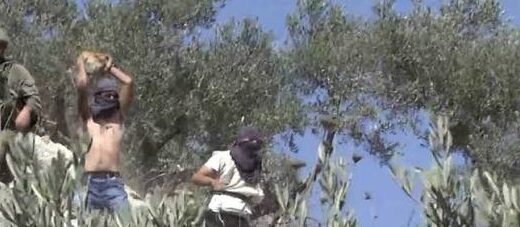
The areas accessible to Palestinian farmers have steadily shrunk amid an unprecedented escalation in settler violence, which Palestinians attribute to the occupying state’s support and protection, noting both farmers and olive trees have increasingly become targets of these attacks. The landscape itself has changed, hundreds of military barriers, earth mounds, and gates have fragmented the land and cut farmers off from their fields. Access to their olive groves has become increasingly dangerous, exposing farmers to threats against their lives and crops, as well as to the actions of the occupation forces, militias associated with Ben-Gvir, and violent settler gangs.
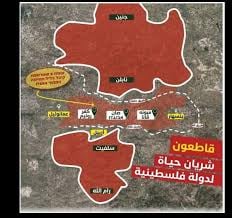
A closer look at the areas cultivated with olive trees in the West Bank, that area amounted to about 552,534 dunums, and the olive tree constitutes the basic pillar of the Palestinian agricultural sector, as it occupies about 85% of the total area of tree horticulture. As for the areas planted with olive trees, according to the governorates, Jenin Governorate ranks first, as the areas cultivated with olives extend over 151,950 dunums, followed by Ramallah and Al-Bireh Governorate in second place directly in terms of area, as the area of olives in Ramallah and Al-Bireh is 80,850 dunums, and Nablus Governorate is in third place, with the cultivated area of 72,193 dunums. Dunums.
As for the Tulkarm Governorate, the area planted with olive trees is 66,111 dunums, then Hebron Governorate, 54,967 dunums, Salfeet Governorate, the cultivated area is 43,410 dunums, then Qalqilia Governorate, the cultivated area is 36,355 dunums. The Bethlehem Governorate is 17,938 dunums. The Jerusalem Governorate records the smallest area planted with olive trees in the West Bank, at about 10,300 dunums only, and in the Jordan Valley – Jericho and Tubas – the area planted with olive trees doesn’t exceed a few hundred dunums, due to the nature of the climate that is most suitable for growing palm trees.
In Gaza, the area planted with olive trees was estimated at about 50,000 dunums before the devastating war launched by the Israeli occupation against the Strip on Oct. 8, 2023. The war rendered nearly 90% of these areas unusable for cultivation and production. According to official Palestinian data, the remaining areas, or those still accessible, have dwindled to just 5,000 dunums, resulting in a sharp decline in olive oil production and widening the food deficit in this vital sector. During the war years, total olive production fell by 87.5%, from 40,000 tons annually to about 5,000 tons. in the meantime, olive oil production fallen by more than 86%, dropping from 5,000 tons to just 700 tons.
This deprived families of a staple household supply and drove up prices in local markets. Meanwhile, the Palestinian Ministry of Agriculture expects 2026 to be a good year for the olive harvest, and that the olive crop will double and increase to reach about 125 kg per dunum, fears are growing, as expectations are no longer, according to many sources, the decisive factor that determines the fate of the season after it turned into a ‘peak season of settler violence’ in light of the experiences of the previous few years, especially last year, which was the most violent in the West Bank during the last twenty years. The United Nations Office for Humanitarian Affairs – OCHA documented 364 violent incidents between Oct. and mid-November, which included attacks launched by settlers on citizens, such as burning their property and fields, stealing and killing their animals, uprooting their trees, and loss of life as well.
It’s expected that the current year will be crueler than the previous one in this season, after the first months of this year witnessed more than 1,600 incidents of settler attacks against Palestinians, which led to physical injuries and destruction of property, compared to more than 1,800 incidents in the whole of last year. This was before the start of the olive harvest season. Besides, according to (OCHA) from the previous harvest season in Oct. 2025 until last Sept. this year, about 28,000 Palestinian trees and saplings, most of them olive trees, were uprooted in the West Bank in incidents attributed to settlers.
The situation becomes even more dangerous when farmland lies near settlements and settlement outposts, where military restrictions intersect with the presence of settlers, bypass roads, gates, and checkpoints. During last year’s olive harvest season, the United Nations documented numerous cases in which farmers were denied access to their fields despite prior coordination arrangements. It also recorded cases in which thousands of dunums of olive groves remained un-harvested following the expansion of new settlement outposts and attacks that prevented their owners from reaching their land.
The situation appears even more alarming during this year’s harvest season, as farmers face an expanding settlement enterprise, an unprecedented proliferation of terrorist outposts and settler herding farms, and ongoing attacks on Palestinian villages and agricultural land. These dangers and concerns have been compounded by the decision of the Israeli police’s Central Unit, under the command of Avishai Moalem, a figure close to Ben-Gvir, to halt coordination with the Shin Bet in efforts to curb settler attacks, even to the most limited extent. With the Central Unit of the Israeli police in the occupied West Bank suspending coordination with the department responsible for Jewish terrorism within the Shin Bet – Israel’s internal security service – the settler attacks have escalated.
The settler Attacks on Palestinian Farmers Begin Early in This Year’s Olive Harvest Season, resulting in fatalities. The Ramin Plain – east of Tulkarm—and its surrounding areas witnessed an escalation in settler violence. The most recent incident was a bloody attack carried out by settlers, who enjoy full protection from occupation forces, claiming the life of Ali Hassan Al-Bazari and leaving 9 others with injuries ranging from moderate to critical, several of the wounded were transported to Thabet Thabet Government Hospital in Tulkarm and Rafidia Hospital in Nablus. The settlers, who attacked the citizens during the olive harvest, did not stop at committing this horrific crime against the residents of Burqa and Bazaria.
They also obstructed ambulances, assaulted paramedics, and attempted to prevent them from providing necessary medical aid to the injured. Red Crescent teams treated injuries caused by blows from rifle butts and sharp objects. The casualties included a Palestinian woman and elderly farmers, among them an 81 years old man and a 72 years old woman. A similar terrorist attack, Mashhour Shaher Yassin, 51, from the Yasof town east of Salfeet, was killed after being struck by live ammunition. He was shot during an assault carried out by scores of settlers from the ‘Havat Anton outpost’ against the ‘Al-Nasba area’ east of the town, the settlers protected by occupation forces attacked the town, specifically the Al-Nasba Neighborhood, and targeted houses, resulting in Yassin’s fatal injury, while his nephew sustained back injuries from bullets.
The settlers’ attacks, and their acts of terrorism have spread across towns and villages in many governorates of which Nablus’towns and villages that include Borqa, Aqraba, Beit Imrin, Sebastia, Burin, Beita, Jama’in, Urif, Asira Qibliya, Qariot, Jalod, Beit Furik, and Deir Sharaf, while in Ramallah and Al-Bireh Governorate, attacks have affected Al-Mazra’a Sharqiya, Al-Mughayir, Um Safa, Rantis, Sinjel, Turmusaia, and Ein Yabrod. In Jenin Governorate, they extended to Kafr Rai, Faqqu’a, Deir Abu Da’if, and Ya’bad. Other affected localities include Deir Ballut, Rafat, Al-Zawiya, Deiristiya, and Haris in Salfeet Governorate, as well as Taqu’, Nahalin, Al-Khader, Battir, and Husan in Bethlehem Governorate. The attacks have targeted Palestinians through physical assaults, while agricultural land has been subjected to arson, uprooting and cutting trees, and thefting crops. The issue isn’t merely one of settler violence and terrorism, but also of the occupying state’s broader policy of encouraging such acts and providing protection for those responsible.
The central objective of this policy is to deprive Palestinian farmers of their harvest and strip them of their land ownership rights. Even though the Israeli occupation army has issued no official order imposing a blanket ban on olive picking during the 2026 season, Israeli forces and settlers have effectively prevented farmers from reaching their land through widespread attacks and on the ground restrictions, these include stringent access restrictions, obstacles, and undisclosed or emergency military orders that make reaching olive trees an extremely dangerous undertaking. The occupation army also issues closure orders, describing them as “preventive” measures ostensibly intended to prevent friction and protect Palestinians from settler attacks during the olive harvest. In practice, however, these orders empower the military to prevent activists from reaching olive groves.
In Jerusalem, the planning and human rights organizations Bimkom and Ir Amim, together with several residents of Um Tuba, filed an objection last Tuesday to the ‘Nofei Rachel’ settlement plan that entail the construction of 650 housing units on 27 dunums in Um Tuba, east of occupied Jerusalem. The objection cited a series of procedural flaws in advancing the plan, foremost among them the claim that the company that submitted it doesn’t meet the legal ownership requirement. During the hearing at which the plan was approved for deposit, it was stated that Nofei Rachel owned 90% of the planned area.
However, an examination conducted by Bimkom and Ir Amim, based on final land registry records, found that the company was registered as owning only 65% of the area, 1% point below the 66% ownership threshold required by law for submitting the plan. Moreover, about 20% of the land parcel remains subject to ownership disputes, which have yet to be resolved. During the deposit hearing, a representative of the Israel Land Authority stated that the state claims ownership of approximately six dunums within the plan’s boundaries. According to the objectors, the result is a plan to establish a new neighborhood comprising 650 housing units that would eliminate a road essential to serving and developing the existing Palestinian neighborhood.
In the meantime, around 500 diplomats, ministers, and former European officials called on the European Union and its member states to take action against a settlement project that Israel plans to implement in the E1 area east of occupied Jerusalem. Their appeal appeared in an opinion article published by the French newspaper Liberation last Monday. The signatories included former French PM Dominique de Villepin and Alain Juppé, who also served as foreign minister, as well as former Italian PM Massimo D’Alema, former Belgian PM Yves Leterme, and former Swedish PM Stefan Löfven, other signatories included former Presidents of the European Parliament Josep Borrell and Enrique Barón Crespo.
The article showed that the Israeli government plans to build more than 1,200 housing units in the area, warning that the project would further undermine the prospects for establishing a Palestinian state. The signatories criticized the EU’s failure to act, stating, ‘Despite the far reaching implications of this latest annexation of territory, the EU has taken no action to prevent the plan from being implemented and has failed to meet its obligations under the European treaties to respond to violations of international law.’ They urged the European Commission to submit ‘legislative proposals immediately’ to ‘impose sanctions on all financial institutions and other service providers involved in implementing the project and establishing other illegal settlements’ and to ‘prevent any EU trade with illegal settlements.’
List of Israeli Assaults over the Last Week Documented by the National Bureau:
Jerusalem:
- Preventing residents of the Silwan town from accessing their lands in the Wadi Rababa Neighborhood, obstructing the olive harvest, and seizing harvesting tools and the olive crop.
- Burning about 55 olive trees, aged over 40 years, on a resident’s land in the Barriyat Abu Dis area ‘spanning about 14 dunams’ while the owner was harvesting olives with his wife, children, and grandchildren.
- Storming the Bir Maskoub Bedouin Community area, provoking residents, and demanded them vacate the area, claiming ownership of the land; however, the residents confronted them and managed to drive him away.
- Assaulting herders and seized about 130 sheep in the Wadi Abu Hindi community, attacking citizens, who harvest olives in the Anata town, assaulting farmers and preventing them from completing the harvest; several citizens, who had arrived to protest the settlers’ attack were beaten, abused, and arrested, with some being taken to an unknown location.
- Demolishing a 5-story residential building belonging to Jerusalemite Mustafa Abu Sbitan in the Al-Tur town, attended by the Israeli National Security Minister Ben-Gvir, noting that the building contained 10 apartments housing about 70 people.
Bethlehem:
- Destroying several olive trees belonging to Abu Ramzi Khalif in the Abu Injim area, southeast of Bethlehem, stealing olives and breaking 40 trees on the lands of the same village.
- Firing live ammunition at shepherds in Al-Minya village, in the Khalayel al-Qasr area east of the village, and in the Wadi al-Batikh area in the Beit-Fajjar town, storming the area and installing signs along two roads on the outskirts of Beit-Fajjar and along Wadi Taqtaq Road, between the villages of Al-Manshiya and Marah Rabah.
Ramallah:
- Leveling vast areas of olive planted land in the Wadi Zaiton near the Um Safa Cemetery, just 10 m from residents’ houses, following the establishment of a settlement outpost there 2 months ago.
- Succumbing to gunshot wounds sustained in a settler attack in Kobar, 19-year-old Baha’ Sami Amin Natsheh.
- Attacking residents’ houses in the Burqa town, while occupation forces stormed the village to protect settlers.
- Injuring 6 Palestinians in a settler assault on the outskirts of the Yabrood village.
- Cutting down several olive trees and grazing sheep among residents’ houses in the Al-Sahl area of the Al-Mughayir village.
- Injuring 5 Palestinians, including a man and his wife, in a settler attack in the Al-Tin Shami area near the Rantis village.
- Setting fire to the house of Ahmed Moh’d Bajis in Borqa, causing extensive damage.
- Setting fire to a vehicle in the Bir Abu Khashaba road between Silwad and Ein Yabrud.
- Attacking the house of Abdul Khaliq Tamimi in the Deir Nizam village, damaging property, burning a vehicle, and painted racist slogans on the walls of houses.
Nablus:
- Storming the Yosof’s Tomb in a large-scale incursion involving hundreds of settlers that lasted for hours, during which they performed Talmudic rituals at the site after occupation forces sealed off the area.
- Attacking farmers and preventing them from harvesting olives in the Odala village.
- Attacking Jihad Abu Sharkh’s house on the outskirts of the Iraq Burin village, smashing his vehicle and attempting to break into the house before local residents confronted the attackers.
- Attacking residents’ houses in the western part of Osarin and assaulting several people, including a 50 years old man, inflicting to him injuries and bruises.
- Attacking olive harvesting farmers in the Burin town, and seizing agricultural equipment and quantities of olives. Meanwhile, causing 3 residents to suffer from tear gas inhalation after occupation forces fired tear gas during a raid on the town.
- Storming the Awarta village, performing Talmudic rituals at the Al-Uzair shrine, and holding boisterous celebrations that provoked local residents.
- Beginning work to establish a new settlement outpost in Beit Imarin, threatening further settlement expansion and the seizure of residents’ land.
- Setting fire to 4 vehicles parked in front of houses in the western part of Aqraba, causing damage, and painted racist, revenge inciting slogans.
- Storming the entrance to Al-Lubban Sharqiya and the Harat Shari’ Neighborhood along the main Nablus – Ramallah road, raising scores of occupation flags among residents’ houses and engaging in provocative acts.
Salfeet:
- Attacking olive pickers in the Wadi Abbas area of Qarawat Bani Hassan, injuring several farmers and preventing them from continuing their agricultural work.
- Beating Ismail Mosa Abu Asba while he was harvesting olives in the Rafat village.
- Attacking a farmer’s vehicle while they were working on their land in the northern area of Deir Ballot.
- Assaulting several olive harvesting farmers in the Wadi Nar area in the Marda village, including brothers Mou’d and Nasrallah Majid Aqil Khafash, who were subsequently taken to Martyr Yasser Arafat Hospital in Salfeet.
- Attacking the ‘Qamar Balad’ eco-farm in the Al-Jiza area of the Farkha village, attempting to set fire to a chicken coop and wrote racist slogans on the walls of a livestock farm before being confronted by local residents.
Jenin:
- Stealing olives in areas of the Jenin Governorate amidst rising attacks on farmers on the eve of the olive harvest season, local sources reported that the theft targeted olive crops on private land in the towns of Kufr Ra’i, Faqqua, Deir Abu Da’if, and Ya’bad, as well as in areas adjacent to settlements.
- Injuring a Palestinian in an attack by settlers in the Arabuna town.
- Bulldozing land and uprooting olive trees in the Anza village, specifically in the village plain bordering the Jenin – Nablus road, covering an area of about 56 dunams.
- Stealing olive fruits from lands belonging to the Ajja town, in the southern part of the plain surrounding the settlement.
- Injuring 3 Palestinians after being beaten by a group of settlers during an attack on the Mariha town, near Ya’bad, south of Jenin.
Jordan Valley:
- Continuing land leveling and expansion works at Al-Hamma Spring in preparation for seizing the site and denying Palestinian residents access to it, including bringing in a concrete mixer and pouring concrete as part of development works in the site.