By: Madeeha Al-A’raj
The ‘National Bureau for Defending Land and Resisting Settlements stated in its latest weekly report , that the West Bank has become out of control, where the Israeli opposition leaders Yair Lapid, Avigdor Lieberman, and Yair Golan have described it as a “shame” for the Israeli Occupation State. According to the Occupation Army and the Shin Bet, data showed that since the beginning of the war waged by Israel on the Gaza Strip, about 1,575 crimes carried out in the West Bank of which 704 in the first 10 months of 2025, using machine guns, bladed weapons, and inflammable materials, 368 of those crimes were classified as ‘intentional’, where 174 Palestinians have been injured since the beginning of the year by a 12% increase compared to 2024.
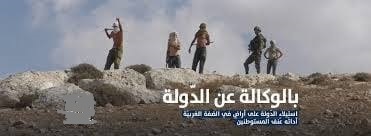
In a decisive way, the Chief of Staff of the Occupation Army, Eyal Zamir, said that the settlers ‘crossed the red lines’ and that his army ‘won’t tolerate a criminal minority to defame the image of Israelis.’Noting that, he is well aware that this terrorism, is protected by his army, blessed by the Netanyahu-Smotrich-Ben-Gvir alliance, and covered up by the American Administration. This terror has a clear function, to displace the Palestinians from their lands and homes. In fact, scores of Palestinian communities, especially in areas C are now targeted for displacement by the occupation army and Jewish terrorist organizations.
The Palestinians in these communities live off agriculture and livestock, and their lives turned into hell after the Israeli authorities has begun to systematically implement a policy aimed at displacing thm by creating an unbearable living situation, including imposing a strict ban on construction in these communities, refusing to connect them to basic facilities, such as, electricity and water, and refraining from building roads.
As a result of the violence, the pace of displacement has increased in the last 2 years where scores of Palestinian communities have been forcibly displaced since Oct 2023, with the number of displaced residents exceeding 2000. Thousands more, living in dozens of Palestinian communities, still face the real threat of displacement due to daily settler attacks, particularly from outposts and pastoral farms that proliferated during the war on the Gaza Strip. B’Tselem said, ‘these outposts and farms were established in Oct 2023 with the assistance of the occupying power, aiming at the displacement of the communities and seize as much land as possible.’
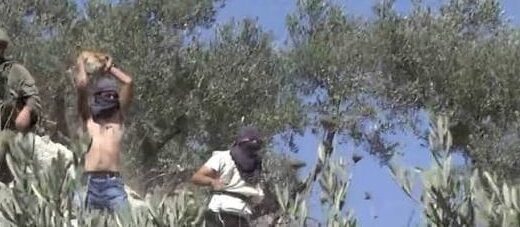
The violence of the settlers living in these outposts has escalated and become a terrifying daily routine for the residents of the communities, including serious physical assaults on residents, settler incursions into communities and residents’ homes day and night, setting fires, expelling Palestinian shepherds from grazing areas and farmers from their fields, killing and stealing livestock, damaging crops, stealing equipment and personal property, and blocking roads.
According to B’Tselem, ‘2,700 Palestinian citizens were displaced during the war. In Hebron Governorate, displacement operations took place in 8 locations, affecting 64 families, comprising 489 individuals, including 211 minors, in Bethlehem Governorate, 6 locations, affecting 46 families, comprising of 211 individuals, including 99 minors, in Ramallah and Al-Bireh Governorate, 14 locations, affecting 177 families, comprising of 1,150 individuals, including 508 minors, in Jerusalem Governorate, 2 families from the Hizma wilderness, comprising 18 individuals, including 4 minors, in Nablus Governorate, 4 locations affecting 17 families, comprising of 126 individuals, including 57 minors, Tubas Governorate had a high number of displacements in 4 locations, affecting 75 families, comprising of 435 individuals, including 207 minors, in Jericho Governorate, 2 locations, affecting 43 families, comprising of 262 individuals, including 126 minors, and Salfeet Governorate, affecting 9 families, comprising of 47 individuals, including 23 minors.
During the Netanyahu-Smotrich-BenGvir’ Government, the occupation authorities focused on displacement efforts, primarily on some areas of the West Bank, most notably, the Ramallah Governorate, and the area south of the Hebron Hills, where thousands of Palestinian citizens, half of them children, live under the threat of displacement from their homes and villages, and in the vicinity of the city of Jerusalem and the ‘Ma’ale Adumim area’ where about 3,000 Palestinians are threatened with displacement, including 1,400 Palestinians living in the 1E area, which Israel turned into an area of influence for the ‘Ma’ale Adumim settlement’ to create urban contiguity between the settlement and the city of Jerusalem and the Jordan Valley area, where several thousand Palestinian citizens live in about 20 pastoral communities on their lands or on the edges of lands that the army declared as firing zones, and the Jordan Valley area where about 2,700 Palestinian citizens live in 20 pastoral communities on their lands or on the edges of lands that the army declared as firing zones.
In recent weeks, the Palestinian Herding Communities were targeted for demolition and displacement by the Israeli army and settlers. These communities surround Jerusalem, particularly the Ma’azi Jaba’ community northeast of the city and the Khirbet Um-Khair community in Masafer Yatta, south of Hebron. Both communities have recently become direct targets of harassment and provocation by the Israeli army and the criminal acts of Jewish terrorist organizations ‘the Hilltop Youth, the Price Tag group, and the Price Tag movement’.
This prompted the United Nations Office for the Coordination of Humanitarian Affairs in the Occupied Palestinian Territory, in its latest report on the humanitarian situation in the West Bank on the 7th of this month, to warn of the serious repercussions of the policies of the occupation authorities and the practices of the settlers. The Euro-Mediterranean Human Rights Monitor also warned of the dangerous escalation in settler crimes against Palestinians, especially with the start of the olive harvest season, which are carried out under the direct protection of the Israeli army in the complete absence of any accountability or deterrent measures.
The Netanyahu-Smotrich-Ben-Gvir Government disregarded such warnings as long as they remain mere verbal pronouncements and don’t translate into deterrent measures by governments, particularly those in the EU, the occupying state’s most important economic and trade partner. This disregard is further compounded by the current US Administration’s policy of favoring the occupation army and settler practices, and its decision to lift sanctions on those settlers whom the previous US Administration designated as terrorists and sanctioned, along with the entities that provide them with support and patronage.
Thus, the Bedouin communities surrounding Jerusalem find themselves facing imminent forced displacement, especially with the commencement of the settlement project in E1. This is evident from the measures and practices taking place on the ground.
In the second half of August, Civil Administration teams, accompanied by the Israeli army, distributed 42 demolition orders for structures in the Al-Mushtal, Wadi Jamal, and Wadi Al-Hawd areas of Al-Eizariya -east of Jerusalem. The orders related to the construction of the settlement road that Israel calls the ‘Fabric of Life’” and that Palestinians refer to as the ‘Sovereignty Road’, alluding to its political objective of imposing ‘sovereignty’ over the West Bank. The existence of 22 Palestinian Bedouin communities is under serious threat, as they are expected to be displaced by the continued settlement construction in the E1 area.
Demolition orders have been issued in parallel with settler acts of terror against Bedouin communities in the area, particularly the Palestinian residents of Ma’azi Jaba’, to displace them. The objective is clear to seize hundreds of dunams of land to expand the Adam settlement, which the occupation established on Jaba’ land, and to connect it with the Binyamin settlement, thus creating geographical contiguity between the two. The Ma’azi Jaba’ community comprises 200 Palestinian residents, including about 40 families and 70 children under the age of 18, living in dire conditions and lacking even the most basic necessities.
It should be noted that the occupation authorities published a year ago a detailed organizational plan to expand the ‘Geva Binyamin settlement’ by building a new neighborhood on the lands of the Jaba’ on an area of 150 dunams on the northern side of the settlement, and pasture lands with the aim of fattening the aforementioned settlement opposite the ‘Sha’ar Binyamin settlement’, but the ‘Ma’azi Jaba’ Gathering has become the dividing line between these two settlements, which explains this focus on it to be displaced.
The Um-Khair village has also become a direct target of the displacement policy. At the end of Oct, the occupation authorities delivered final demolition orders to a number of homes and residential and service structures in the village during a raid conducted with the Civil Administration, amid fears of a mass demolition campaign in the coming days.
The orders included 14 homes and structures, among them the Um-Khair Community Center. The Khirbet Um-Khair is one of the most targeted communities for demolition in Masafer Yatta, having witnessed more than 20 demolitions since 2007, affecting over 100 residential, agricultural, and service structures, the most recent of which occurred in Feb of this year.
The village is experiencing dire humanitarian conditions amidst escalating settlement activity, following the recent establishment of an outpost by settlers within its lands, coupled with ongoing restrictions and land confiscation. In any case, Um-Khair remains a symbol of the steadfastness of the Massafer Yattas, a steadfastness whose image was shaped by the martyrdom of both Haj Suleiman Al-Hathalin and Awda al-Hathalin by terrorist settlers.
The village located east of Yatta, south of Hebron, occupies 1,000 dunams of land purchased by residents displaced by the Israeli occupation from the Tel Arad area of Beersheba in 1948. Since then, they have lived here, practicing agriculture and herding on the surrounding lands, which cover 6,000 dunams of farmland and mountains. Only about 300 people from the Bedouin al-Hathalin tribe remain in the village, surrounded by settlements and deprived of basic necessities. They face the constant threat of displacement and forced eviction.
Thus, the UN Office of the High Commissioner for Human Rights in the occupied Palestinian territory last week warn against demolition orders issued by the Israeli authorities on the 28th of last month in the village of Um-Khair in Masafer Yatta, south of Hebron, which threaten a new wave of forced displacement. In the warning, the UN office called on the occupying authorities to immediately halt the mass demolition orders, which target 11 homes, vital community infrastructure, and about 35 extended families who have lived there since being expelled from their lands in the Negev during the mass forced displacement of Palestinians in 1948.
Moreover, the so-called ‘Settlement Council of Judea and Samaria’ distributed 60 drones to settlements and pastoral farms in the West Bank, supported by the Settlement Division of the Civil Administration, headed by Bezalel Smotrich, funded by Yossi Dagan, head of the ‘Samaria settlement council’ in a fundraising campaign in the USA. At the ceremony, Dagan declared, ‘We are here to achieve victory.’ noting that Dagan holds an influential position in the Likud Party and is known for his extremism and support for the ‘Hilltop Youth’ and other Jewish terrorist organizations operating in the settlements. Dagan also joined the FM Smotrich in March 2003 in calling for the destruction of the Huwara town.
List of Israeli Occupation and Settlers’ Assaults over the
Last Week Documented by the National Bureau:
Jerusalem:
- Attacking a number of workers and olive pickers in the Beit Doqo town, in the Kroum Al-Hara’ieq” area, destroyed bulldozers and seized computers from the workers.
- Injuring 7 citizens as a result of an attack by settlers in the Ma’azi Bedouin Community east of the Jaba’ town, and burned their property.
- Forcing 3 families in the Silwan town to forcibly evacuate their homes.
- Establishing a new settlement outpost last Sunday near the Bedouin communities of Abu Ghaliyeh and Al-Ara’ara, east of the town of Anata, included for mobile homes, and moving equipment and tools.
- Storming the Khallat al-Sidra community near the village of Mikhmas and attempted to assault residents, set fire to 2 vehicles.
- Demolishing a park in the Mount Hermon area of the Qubaiba yown.
- Notifying homeowners and landowners of impending demolition and eviction to make way for a waste incineration plant in the Qalandia village,threatened the demolition of 2 buildings housing dozens of Palestinian families, in addition to the confiscation of 150 dunams of agricultural land for the reconstruction of the Apartheid Wall.
Hebron:
- Injuring a Palestinian man last Sunday morning after being attacked by armed settlers from the Karmiel settlement and the Shimon outpost. He was transferred to Yatta Governmental Hospital for treatment, and his injuries were described as moderate.
- Uprooting 70 olive saplings belonging to Nasser Abu Obeid in Khirbet al-Taban in Masafer Yatta and cut the fence surrounding his land.
- Storming a house in the Beit O’mar town in Masafer Yatta and carried out provocative acts against the residents, demolished residential rooms and agricultural facilities in Masafer Yatta and destroyed a number of water tanks belonging to citizen Samir Hamamda, whose family of seven is now homeless. Moreover, theoccupation forces issued a military order to seize and confiscate more than 38 dunams of the town’s land in ‘Dahr Afteima, Al-Yanbu, Khallat Al-Aran, Wadi Ashkhit, Khallat Al-Farn, and Sidr Safa’, which are planted with grapevines, almond and olive trees.
Bethlehem:
- Attacking Palestinian vehicles in the village of Al-Maniya, while others grazed their sheep in the town of Beit Fajjar and assaulted olive pickers in Nahalin to the west. Settlers also attacked olive pickers in the Wadi Salem area, assaulting Jihad Ibrahim Najajra and his son Ibrahim while they were harvesting olives before arresting them and seizing the harvested olives, as well as the equipment used in the harvesting process.
- Shooting a 25-year-old Palestinian man during an attack by a group of settlers, protected on the village of Kisan while they were plowing their land in the Wadi Abu Ayyash area.
- Storming the Khala’il al-Luz area, vandalized a greenhouse and a water well, and stolen 20 posts belonging to a local resident.
- Demolishing 2 houses in the village of al-Walaja and issued demolition orders for 3 houses under construction in the Khallat al-Hour and al-Sarj areas.
Ramallah:
- Setting fire to 3 vehicles in the village of Deir Dibwan in the Tel area before fleeing, burned 2 vehicles on the Atara town, carried out under the protection of Israeli occupation forces deployed around the town.
- Attacking farmers and international solidarity activists as they headed to land in the southern areas near the bypass road and the “Al-Manatir” area to the east, forcing them to turn back in the town of Kafr Malik.
- Imjuring 3 Palestinians after being attacked by settlers in the village of Deir Nizam, forced them to leave their land. They also the village of Al-Mughayyir, burned residents’ vehicles, while others stole olives from land in the Al-Khala’il area south of the village, belonging to a resident of the neighboring town of Turmus Ayya.
- Attacking the ‘Khirbet Al-Tel’ area in the Sinjil town, opened fire on several young men in the area, wounding one in the foot.
Nablus:
- Establishing settlement outpost on land belonging to the village of Majdal Bani Fadil, set fire to dozens of olive trees spread across vast areas of the village’s southern lands.
- Attacking Palestinian shepherds in Khirbet al-Tawil, east of the Aqraba town, and attempted to force them to leave the area. It should be noted that settlers routinely harass shepherds from their limited grazing lands, preventing them from grazing their livestock, to the point that tens of thousands of acres of pastureland in various areas of the West Bank have fallen under their control.
Tulkarem:
- Launching a large-scale attack on industrial and agricultural facilities near the Beit Lid town, resulted in significant fires and injuries to several residents. The settlers set fire to a number of Palestinian vehicles within the industrial zone known as ‘Al-Ladain’ (The Plastics) on the outskirts of the town, including 4 trucks belonging to the Al-Junaidi Factory.
- Settingfire to agricultural land, and tents belonging to a Bedouin community of 2 to 5 families residing in the area.
Jordan Valley:
- Demolishing a residential tent and destroyed crops in Khirbet Farsiyah in the northern Jordan Valley, stolen agricultural equipment and began plowing land to seize it.
- Storming the Makhoul and Samra communities in the northern Jordan Valley in a provocative act intended to intimidate residents.
- Injuring a Palestinian man from the Arab al-Rashayda Bedouin community north of the Jordan Valley then was hospitalized.
- Attacking the Bedouin community, fenced off agricultural lands in the Farsiyah area, registered to Palestinian citizens, where tens of thousands of dunams of agricultural and grazing land are now surrounded by barbed wire, deprived owners of accessing them.