 المكتب الوطني للدفاع عن الارض ومقاومة الاستيطان منظمة التحرير الفلسطينية
مقالات مشابهة


Settlement Weekly Report 11 – 17 July, 2026
By: Madeeha Al-A’raj
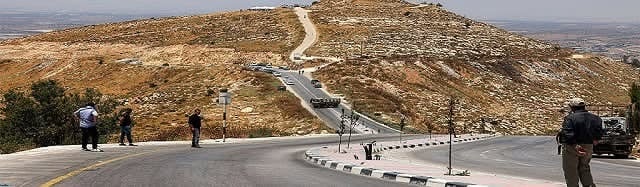
The ‘National Bureau for Defending Land and Resisting Settlements stated in its latest weekly report , that the Israeli Occupation Government has adopted the settlement road network as a key instrument for reshaping the geography of the West Bank and consolidating control over Palestinian land. The roads connect settlements, settlement outposts, and so-called Pastoral Farms with one another and with Israel, while simultaneously isolating Palestinian communities and fragmenting them into disconnected enclaves.
They are investing substantial budgets to construct hundreds of KMs of bypass, security, and secondary roads designated primarily for settlers. The roads consume vast areas of the West Bank, while additional land is confiscated on both sides to establish “security buffer zones” as part of a broader policy of separation, fragmentation, and isolation. They also serve as geographical barriers that restrict the natural expansion of Palestinian towns and villages.
The settlement road network encircles Palestinian communities, forcing residents to rely on lengthy alternative routes while enabling settlers to travel quickly and freely. It also contributes to the militarization of the area by prioritizing settler movement and security. Designed to bypass densely populated Palestinian areas, these roads provide rapid connections between Israeli settlements and cities through advanced infrastructure, including lighting and security systems, in sharp contrast to the inadequate infrastructure serving much of the Palestinian road network.
Within the context, the occupation government is currently considering approving a large-scale plan to allocate more than one billion shekels to pave a number of new roads in the West Bank within a plan that includes more than 100 settlement blocs and 160 farms. The budget, amounting to NIS 1.075 billion, will be divided between the Ministries of Transport and the Army to meet the immediate need for safety infrastructure.
According to Israeli Ch. 14, a specific budget has been allocated to the four evacuated settlements in the northern West Bank ‘Homesh, Sa Nour, Ganim, and Kadim’, in addition to a wide range of additional settlements that have been established or will be established. The Minister of Finance and Minister of Settlement in the Ministry of the Army, Bezalel Smotrich, described the decision as ‘historic’. According to this minister, this step aims to strengthen state security and strengthen settlement in the West Bank.
He indicated that his government ‘is leading a revolution in the field of settlement security that includes more than 100 settlement blocs and 160 farms, and that the plan will ensure organized and safe traffic, with the integration of basic security elements into these roads.’
As for the chronology of this policy, during the years 2024 and 2025 and until mid-2026, the Netanyahu government approved projects to construct hundreds of kilometers of settlement bypass roads, allocating budgets exceeding billions of shekels with the aim of isolating Palestinian communities, linking settlement outposts to major blocs, and creating what are known as ‘fabric of life’ roads to tear apart geographical continuity.
The most prominent bypass roads and settlement road networks that were built or expanded during this period in the West Bank can be summarized as follows: Focus on Route 60, which traverses the West Bank from north to south, from Jenin to southern Hebron, reaching Beersheba, and the Ramallah-Jerusalem road network through launching a huge expansion project for this road, especially in the section extending from the town of Hizma, north of Jerusalem, to the ‘Oyoun al-Haramiyya’ area, north of Ramallah.
Besides, the theft of thousands of dunams and the confiscation of lands belonging to the villages of ‘Singel, Al-Laban Al-Sharqiya, Al-Mazra’a Al-Sharqiya, and Al-Sawiya’ for the purposes of expansion, and the settlement Road 45, which in 2026 witnessed the implementation of bulldozing works to construct the road, the link between the settlements north of Jerusalem, to connect the settlement blocs there to the main road network, as well as the ‘Fabric of Life’ roads ‘the E1 area and Jerusalem’ with budgets of millions of shekels, with the aim of preventing Palestinian access to the area E1 and linking the ‘Maale Adumim’ settlement to the city of Jerusalem to divide the West Bank into two parts:
Roads in the northern West Bank ‘Nablus and Jenin area’ coinciding with the decisions to cancel the ‘Disengagement Law’ and resume settlement in Homesh and Sanur, after dirt roads and settlement connections with a length exceeding 223 km were built, with the aim of linking random settlement outposts to the Jordan Valley, and severing the geographic connections between the Nablus and Jenin governorates.
Moreover, the Netanyahu government also approved a wide network of bypass and additional security roads extending throughout the length and breadth of the West Bank during this period, as it recently approved in July 2026 a huge new financing plan to strengthen and expand the transportation networks linking the settlements and isolated pastoral farms to confirm the reality of ‘effective annexation’.
As for the most prominent settlement streets and roads that have been built or begun to be implemented and expanded, they are the road network in the northern West Bank ‘Nablus, Salfeet, and Jenin’, the Mount Ebal and Homesh roads, where the year 2026 witnessed the inauguration of a settlement road network extending from the new pastoral outpost on the top of Mount Ebal ‘north of Nablus’ all the way to the ‘Homesh and Sanur settlements’ in the north to secure the movement of settlers without passing through the areas.
The inhabited Palestinian territories, and the roads of two cities that the occupation authorities plan to establish, namely ‘Rehnit’ and ‘Rosh HaAyin Mizrahit’ in conjunction with the plan to establish the two new settlement cities in the northern West Bank ‘on the lands of Arraba, Deir Ballut, and Al-Zawiya’, the occupation authorities began constructing preliminary roads to connect these sites to the Green Line by confiscating hundreds of additional dunums to expand the section linking the ‘Geva Benjamin settlement’ to the west of the city of Ramallah with the settlements in the northern West Bank.
In the middle of the West Bank, the occupation authorities built a road network in the vicinity of Qalandiya and Birnabala with a road extending about 9 km in length, to provide rapid and separated movement for settlers coming from the north and west of Ramallah ‘through the lands of Bir Nabala, Al-Jedira, and Rafat’ towards Jerusalem and the lower Al-Bireh – Ramallah bypass road to connect the settlements located east of Ramallah, ‘such as Mikhmas’ with the western settlements ‘such as Givat Zeev’ without the need to pass through populated Palestinian areas.
It caused the destruction of large areas of the lands of the surrounding villages, as well as the Al-Eizariya and Abu Dis Tunnel Road ‘the fabric of life road for the Palestinians’, where new paths were cut and paved to completely separate the movement of Palestinian vehicles in the areas of East Jerusalem, to clear the main streets above the ground for settlers in preparation for construction in the ‘E1’ area.
It’s also the case in the southern West Bank, where a road network is being built in the Bethlehem and Hebron governorates, such as the modified Bethlehem-Beit Jala bypass road, which is a project that includes two tunnels and a suspension bridge, where work has been accelerated to connect the ‘Gilo settlement’ directly south of Jerusalem with the ‘Gush Etzion settlement’ bloc to the south, to avoid passing through Palestinian residential areas.
In addition to the roads linking the pastoral outposts in Masafer Yatta and the Jordan Valley, where tens of kilometers of rugged bypass dirt roads were built to secure the new settlement outposts and pastoral farms that took over large areas south of Hebron and in the eastern slopes of the West Bank mountains in the region. As for the total outcome, it was: 223 km of new streets and roads that were completely built to serve the settlements with the aim of completely isolating the south of the West Bank from its center and north, with military orders amounting in the last two years to about 40 military orders under the name ‘security roads and buffer zones’ through which they seized thousands of dunums of private agricultural land.
The new settlement roads came in extension of old bypass roads that were frozen, such as the Huwara bypass road ‘south of Nablus’, where bulldozing and actual construction began in February 2021, after approving its budget and beginning to confiscate lands in 2019.
It was officially opened and paved in stages extending until the end of 2023 and the beginning of 2024 to conduct settler movement in an isolated manner and the Al-Aroub Bypass Road ‘north of Hebron’, where the occupation authorities began the actual construction and bulldozing of the road extending between the ‘Gush Etzion settlement’ complex and Halhul in late 2020 and the beginning of 2021, and the entire road was opened and inaugurated for use on June 19, 2023 under the name ‘Moshe Levinger Road’, without forgetting the Prophet Elias Bypass Road ‘east of Qalqilya’, which is located on Al-Aroub Road. 55 settlement.
The occupation began the actual bulldozing and demolition of it in late 2016, and it was completed and completely opened to settlers in 2017, causing the confiscation and bulldozing of hundreds of dunams of olive trees for the people of the villages of Nabi Elias and Ezbet al-Tabib. Thus, the period between 2024 and mid-2026 witnessed an unprecedented boom in the construction of roads designated to serve settlements, outposts, and pastoral farms, to represent the ‘backbone’ of the silent annexation strategy led by Minister Bezalel Smotrich through the Civil Administration.
According to the latest reports of the ‘Peace Now’ movement, during the year 2025 alone, settlers established more than 60 new pastoral outposts, accompanied by the construction of hundreds of kilometers of connecting roads, facilitated and with official financial support from the occupation government. The roads begin as illegal dirt tracks that settlers dig with their vehicles to facilitate the access of four-wheel drive vehicles and water tankers to the isolated hills, and the seizure of Palestinian agricultural roads, as happened west of Sebastia in Nablus in 2025, by seizing dirt roads previously paved by Palestinian farmers, paving them with ‘biscours’ material and paving them to prevent the original owners of the land from using them and accessing their fields.
In addition to constructing paths extending from Tubas north to Jericho, to connect dozens of pastoral outposts specialized in livestock breeding. The goal is to control open spaces and isolate Palestinian villages from the eastern slopes. A new network of dirt and security corridors was also observed connecting major settlements, ‘such as Susiya and Karmiel’ and pastoral outposts spread in the surrounding hills in Hebron Governorate, which led to the deportation and displacement of entire Bedouin communities from their lands.
On the other hand, and in the destructive settlement activities on the eve of the upcoming legitimate elections in Israel next Oct. the signing took place last week in an official ceremony attended by Prime Minister Benjamin Netanyahu, Finance Minister Bezalel Smotrich, and Chairman of the Regional Council for Settlements in the Northern Bank ‘Samaria’ Yossi Dagan. What the occupation government called a settlement ‘framework agreement’ worth NIS 8.5 billion to expand settlements in the occupied West Bank and build new ones, including the construction of 12,000 new housing units and major infrastructure projects.
The agreement is considered the first of its kind concluded by this government with a ‘regional settlement council’ ‘its budget is distributed as follows: NIS 7 billion to modernize the infrastructure of existing settlements, build public buildings, and develop services and environmental projects, and about NIS 1.5 billion to implement what it called strategic development projects, major road networks, and infrastructure designated for new units and future expansion.
The scope of construction includes supporting the establishment and expansion of about 18 settlements in the northern West Bank to increase the numbers of settlers, in that region, in a record manner, Yossi Dagan, head of the Northern West Bank Settlements Council, stated that the long-term goal of these billion-dollar investments is to reach one million settlers in the northern West Bank. This agreement is linked to a cumulative settlement process of plans that have been prepared and initial budgets approved for them at intervals.
The Israeli press described this as transforming the paper settlement plans into a ‘binding framework agreement for immediate implementation’, and it is the first time that the Israeli government has concluded a ‘ceiling’ agreement, ‘financial’ of a size ‘NIS 8.5 billion’ with a regional settlement council. Parts of its budgets were prepared, discussed, and approved within the Israeli ‘cabinet’ and the Ministry of Finance over the past few months as part of Minister Bezalel Smotrich’s plan for the so-called ‘settlement revolution.’
But the final, official, and public signing of its entry into actual implementation has begun now, and according to this government’s plan, new settlements will be built in dozens of strategic locations in the West Bank and the Jordan Valley, including 9 settlements in the north. The West Bank, 7 in the central West Bank, 4 in southern Hebron, 7 in the Jordan Valley, and 6 in the southwestern West Bank.
In addition, the commander of the central region of the occupation army, Avi Balut, decided last Sunday to change the status of the ‘Givat Zeev settlement’ to a city, allowing it to enhance its expansion and confiscate Palestinian lands for its benefit. According to Israeli media, Balut, who is considered the military governor of the West Bank, approved changing the classification of Givat Zeev from a local council to a city, at the conclusion of administrative procedures supervised by the Settlement Directorate in the Ministry of the Army, in cooperation with the Israeli Ministry of Interior, after the settlement’s population reached 35,000 settlers.
The mayor of the ‘Givat Ze’ev settlement’ said that converting the settlement into a city will enhance settlement in the vicinity of Jerusalem, and will also provide a broader municipal framework to keep pace with urban expansion, improve services for settlers, and manage population growth, ‘while preserving the rural character’, as he claimed.
List of Israeli Assaults over the Last Week Documented by the National Bureau:
Jerusalem:
- Carrying out expansion work on a pastoral outpost in the Ma’azi Jaba’ Bedouin community north of occupied Jerusalem.
- Forcing Ali Khalil Abu Teir to demolish his house himself, and imposed a financial fine of NIS 80,000 on him.
Hebron:
- Attacking the family of Ibrahim Ismail Jabour while they were on their land near their home in the village of Huwara in Masafer Yatta, assaulted them, spraying them with pepper spray, resulting in injuries to 7 people, including the elderly Ibrahim Ismail Jabour, as well as the children Mustafa Jabour and Habiba Jabour. They were all taken to Yatta Hospital for treatment.
- Attacking residents in Khirbet Aqwawis, damaging an ambulance and assaulted the residents.
- Widening the 8-km road between the towns of Idhna and Dura, southwest of Hebron, to serve a recently established settlement in the ‘Tarusa’ area. The road begins at bypass road 35 in the Farsh al-Hawa area, passes through the lands of Idhna, Khirbet Suba, Khirbet Humsa, and the village of al-Kum, and reaches the ‘Tarusa’ area, where the occupation has recently begun constructing a settlement on its highest hill.
- Issuing demolition orders for several homes and a park in the Khirbet Humsa and Suba areas, south of Hebron, to make way for a road connecting settlement road 35 to the Tarusa area, where settlers have begun establishing a settlement.
- Demolishing the home of Osama Issa Musaf in the village of al-Dirat, which housed 2 families, and also filled in a 200-cubic-meter water well.
- Widening the road connecting the Suba and Hamza areas, while a truck carrying an electric generator later arrived at Tarousa Hill, indicating that the site is still being equipped with the necessary infrastructure.
Ramallah:
- Injuring 7 Palestinians, including a child in an attack by settlers on the town of Al-Mughayyir. The settlers attacked the home of Moh’d Hamed Abu Aliya, resulting in 1 Palestinian being shot in the thigh with live ammunition and 2 others being wounded by rubber-coated bullets, 10 year old Raed Awda Abu Aliya was injured in the head by a stun grenade. All seven were taken to the hospital.
- Establishing a new outpost on land in the Tel Al-Asur area in the village of Kafr Malik, continued their ongoing settlement expansion and land grab.
- Attacking the Al-Zarqa area in the town of Beitillu, but residents confronted them and forced them to withdraw. Several Palestinians were injured, and vehicles and property were damaged in a large-scale attack by settlers on the village of Deir Jarir.
- Assaulting residents, set fire to inhabited homes, and vandalized vehicles and furniture, causing widespread destruction to homes and property.
- Attacking the village of Burqa, attempted to steal sheep. They attacked the outskirts of the village, raided a sheep pen, and tried to steal the animals before residents confronted them and prevented the theft.
- Assaulting a young man, Moh’d Bader, as he was passing through the area from the village of Jaljulia, northwest of Ramallah, causing him various injuries and bruises. He was taken to the hospital for treatment.
- Bulldozing Palestinian-owned land in the ‘Hariqa area’, mostly planted with olive trees, with the aim of connecting it to the ‘Nili’ settlement in the area between the villages of Deir Qadis and Kharbatha Bani Harith.
- Attacking shepherds in the ‘al-Tall area’, assaulted them, others placed concrete blocks near the main road connecting the al-Tira neighborhood and the village of Ein Ali on a plot of land they routinely trespass on.
Nablus:
- Injuring citizens in an attack by settlers in the town of Beita. The Red Crescent Society said that its crews transported 3 injured people to the hospital, after settlers attacked them by beating them in the town of Beita.
- Attacking Qabalan Municipality’s crews, beaten them and threatened them while they were performing their work installing electricity poles in the area.
- Destroying a farm and its contents in the Masoudiya area in Burqa, official of the Masoudiya Lands Defense Committee, Dhiyab Hajji, said that settlers attacked a farm owned by the citizen Khaled Tamimi, and destroyed its contents, including the agricultural room.
- Injuring 2 citizens by a settler attack on the town of Beit Furik, as a result of the settlers beating them.
- Storming the Al-Nasariya and Al-Badhan areas under the pretext of organizing settlement routes there, as part of the “environmental settlement” campaign.
- Demolishing the building of the Yanun Mixed Basic School in Khirbet Yanun, south of Nablus, which provided education for 15 male and female students from the 1st to 6th grades, about 8 months after the residents of Khirbet Yanun were forcibly displaced.
- Attacking the Al-Dhahra area on the outskirts of the town of Beita, and cut off electricity poles in the area, caused a power outage in a number of homes. Confrontations broke out after citizens responded to the attack, resulting in one injury. Two young men were injured and bruised
Jenin:
- Storming the Ajja town, south of Jenin and conducted a provocative tour. Meanwhile, Israeli occupation forces forcibly displaced residents of Khirbet Isaid and issued more than 10 stop-work and eviction notices for agricultural land in the village of Deir Abu Daif.
- Destroying scores of olive trees on village land in the Khala’il area, southwest of the south of Jenin village.
- Razing agricultural land and uprooting olive trees, caused widespread damage to residents’ property and threatening the livelihoods of dozens of families in the village of Zububa, noted that Israeli forces destroyed more than 1,500 olive trees in the village this month. Additionally, Israeli forces demolished a car wash at the entrance to the town of Arraba, claiming it lacked a permit.
Jordan Valley:
- Uprooting more than 300 trees in the northern Jordan Valley and cut water lines supplying approximately 45,000 dunams of agricultural land. This occurred as part of land-clearing operations to construct a military road and a wall.
- Attacking farmers working in the Safah Tayasir area in the village of Tayasir and obstructed their work.
- Attacking Palestinian homes, cut the fence surrounding one house, broke into the house and sheep pen, and removed the livestock, attempting to seize them under the pretext of searching for lost sheep in the Arab al-Ka’abneh community north of Jericho.
- Demolishing 3 artesian wells in Atouf, east of Tubas. The wells are located in the Ras al-Ahmar area north of Atouf and are situated within Area B.

