 المكتب الوطني للدفاع عن الارض ومقاومة الاستيطان منظمة التحرير الفلسطينية
مقالات مشابهة


Settlement Weekly Report 25 – 31 July, 2026
By: Madeeha Al-A’raj
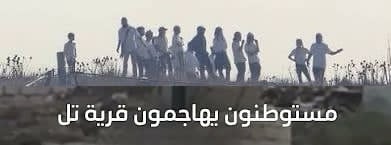
The ‘National Bureau for Defending Land and Resisting Settlements stated in its latest weekly report , that the massacres in the Palestinian villages of Tell on 24 July 2026, and Qariout in March 2026, along with the recent series of attacks in Al-Mughaier and the Deir Jarir massacres, have shed further light on the phenomenon of settler terrorism. According to Israeli authorities, the Tal massacre began with what was described as a routine settler hiking excursion on the outskirts of the village in Area B.
It ended with the killing of several Palestinians after Israeli occupation forces opened fire to protect the march. The incident quickly escalated into one of the deadliest episodes of settler-related violence in recent months. The massacre was followed by a wave of reactions, ranging from calls by extremist voices to erase the village from existence to directives issued by Israel’s Minister of Aermy instructing the military to prepare for an expansion of offensive operations in the occupied West Bank.
Those massacres, and other acts of Jewish terrorism along the West Bank from the Jordan Valley to Masafer Yatta, come as an extension of a coordinated policy between the settlers and the occupation army, with explicit government cover. Since the beginning of this year, the rate of settler violence and terrorism has increased, and this violence has turned into organized practices that are integrated with the policies of the occupation forces and their civil administration, with unmistakable support from Netanyahu and the fascist right in his government, especially Army Minister, Katz, Minister of Finance, Snowtrich, and Minister of National Security, Ben Gvir, in a thoughtful integration of roles.
The most prominent aspects of this integration are evident in support and protection, as the government provides political cover for settler attacks and the army provides actual or implicit protection by intervening to secure the protection of these terrorists or suppressing Palestinians defending their lands, and by expanding control over the land, as attacks on extremist settlement outposts are used as an informal pressure tool to displace Palestinian pastoral and agricultural communities and control the lands, and through the absence of accountability, as the perpetrators of these attacks enjoy widespread impunity.
A number of Human Rights and International reports documented an unprecedented escalation in settler violence in the West Bank, and confirm that it is a systematic policy officially supported by the occupation authorities with the aim of displacing Palestinians and controlling their lands. The ‘OCHA’ has documented more than 1,330 settler attacks in the West Bank since the beginning of 2026, included burning homes and mosques, sabotaging agricultural facilities, destroying water networks for entire villages and communities, and escalating waves of violence that forced many families and herding and Bedouin communities to flee their lands due to the coercive environment imposed by settlers with the support of the occupation army.
The Amnesty International, in turn, issued extensive reports documenting forced displacement and ethnic cleansing of entire Palestinian communities in the West Bank as a result of settler violence. It also documented that ministers in the occupation government, such as, Smotrich’ provided direct financial support, and distributed equipment and four-wheel drive vehicles to settlers in random outposts to facilitate their attacks, which indicated on more than one occasion that settlers enjoy almost complete impunity and accountability thanks to the apartheid regime prevailing in the West Bank.
Furthermore, the settlers’ terrorism causes devastating effects, especially on pastoralist and Bedouin communities in various areas of the West Bank, especially in Dhar-Jabal ‘Shafa-Ghur’, Masafer Yatta, and the Jordan Valley, especially the northern ones. Not only the ‘Hill Youth and Pay thev Price’ terrorist organizations participate in this terrorism, but also increasingly the ‘Hagmar’ units, which are regional terrorist units that mostly include settlers serving in the reserves.
The Israeli government has expanded these units significantly since October 2023, and has also distributed thousands of weapons to civilian security teams, including weapons that Ben Gvir himself delivered to these terrorists on a number of occasions. Not a single soldier from these units has been arrested for killing a Palestinian in the West Bank since at least 2017, and more than 93% of the investigation files into settler attacks were closed without indictments. The United Nations has documented more than 1,330 incidents of attacks by these terrorists since the beginning of 2026.
Lately, on the day the ‘Tal massacre’ occurred, Israeli civil society organizations sent an urgent appeal to the international community to take immediate measures to stop Israel’s violence and prevent massacres committed by settlement militias and the Israeli army in the West Bank. The appeal stated: In recent days, settler militia violence, supported and funded by the army, has escalated throughout the West Bank, including the burning and destruction of Palestinian property and the forced displacement of families and communities.
Such attacks were met with silence and inaction by the international community, allowing the violence to continue and worsen. Today’s incident in the village of Tal, Area B, where a settlement ‘tour’ in the village ended with the killing of 4 Palestinians and one settler, and the injury of a number of people, led to an escalation of violence in the region, after settlers, ministers and members of the Knesset called for more retaliatory attacks that had already begun throughout the West Bank.
Experience showed that such events can quickly develop into mass massacres if they are met with silence, participating in signing the appeal were: Adalah, Akivot, Pimcom, Break the Silence, B’Tselem; Your Blindness is Healed, Army, Hamoked, Field, Human Rights Defenders Fund, Ir Amim, Maksum Watch, Parents Against Child Detention, Peace Now, Physicians for Human Rights in Israel. Yes Religion, and Zazeim.
Within the context, some 600 former Israeli security officials sent a letter to Trump on the eve of his meeting last Tuesday with Benjamin Netanyahu, urging him to personally intervene to stop what they described as “Jewish settler terrorism” in the West Bank. They warned that the continuation of this phenomenon could have serious repercussions for Israel’s security and regional stability. It also referred to attempts to ‘strangle the Palestinian Authority economically and through other means’, asserting that these policies could ‘destroy Israel’s security’.
According to the organization ‘Commanders for Israel’s Security, which initiated the letter, the signatories called on Trump to use his meeting with Netanyahu to press for decisive action against settler attacks, emphasizing that “terrorism is terrorism, regardless of who commits it.’ Among the most prominent signatories were former Mossad chief Danny Yatom, former Shin Bet chief Ami Ayalon, and Major General Matan Vilnai, who previously served as Deputy Chief of Staff of the Israeli army and Minister of Internal Front Protection.
On another level, the occupation authorities are expanding in issuing military orders to serve their settlement projects in the West Bank. During the first half of this year, they issued dozens of military orders that targeted hundreds of dunums of citizens’ land, and led to the establishment of military roads, buffer zones, and sites that serve the settlement project. Last week, the occupation army issued 6 military orders to seize 498 dunums of citizens’ lands in various areas east of Tubas Governorate.
Military orders targeting the lands of Tubas, Tayasir, Aqaba, Ibziq, and Raba, and come as an extension of the “Crimson Thread” project that the occupation announced at the end of last year, and began implementing it this year. The Israeli army also issued orders to seize about 200 dunams of land belonging to several towns in the Jenin Governorate. The orders aimed at expanding military and settlement roads, targeted lands in the towns of Arraba, Ya’bad, Qabatiya, Masliya, Marqa, and Jarba.
The goal is to construct military roads with a total length exceeding 11.3 km in the southeastern, southern, and southwestern parts of the governorate to serve new settlement outposts. Such orders coincide with an intensification of demolition notices and stop-work orders, part of a systematic Israeli policy targeting the Palestinian presence. A policy involves seizing more land and imposing new settlement realities in the governorate, which has become a primary target of Israel’s expansionist settlement policy.
The policy was further solidified after the Israeli Knesset finalized amendments to the 2005 ‘Disengagement Law’, lifting the ban that had been imposed on settlers entering and residing in certain areas of the northern West Bank. The Israeli Army Ministry subsequently announced the full implementation of the amendments and the effective return of settlements that the Ariel Sharon government had evacuated 21 years previously.
In an unprecedented move, the commander of the Israeli army’s Central Command, Avi Blot, signed military orders to seize land in Area A of Jenin Governorate. The land is intended to connect 2 new settlements, ‘Noa and Emek Dotan’, which Israel has decided to establish in the governorate, follows the decision by the political-security cabinet to establish 18 new settlements, in addition to scores of illegal outposts legalized by Netanyahu’s Government after the cancellation of the disengagement law from the Gaza Strip and northern West Bank in 2023.
Settlers are expected to move into the 2 settlements, located east and west of the city of Qabatiya, next month. Infrastructure work is proceeding rapidly in the settlements ‘in order to impose facts on the ground before the Israeli elections’ scheduled for late Oct. According to researcher Dror Etkes of the ‘Kerem Navot’ organization, speaking to the Haaretz Newspaper, this constitutes a deliberate dismantling of what remains of the Oslo Accords.
The Deir-Debwan Municipality, east of Ramallah, also announced that it has been officially informed of 2 military orders issued by the Israeli Occupation Authorities, requiring the seizure of areas of the town’s lands and the construction of a military road, including a number of ponds and plots. The municipality said in a statement that the military orders target lands belonging to citizens of the town, calling on the owners of the lands covered to urgently visit the municipality to complete the legal procedures and prepare objections, stressing that the deadline for submitting objections doesn’t exceed 7 days from the date of notification. A measure comes in light of the escalation of the occupation authorities’ issuance of ‘seize control’ orders on Palestinian lands under the pretext of military purposes, which are used in many cases to construct and expand military roads serving settlements, outposts, and settlement pastoral farms.
List of Israeli Assaults over the Last Week Documented by the National Bureau:
Jerusalem:
- Establishing a new settlement outpost near the Tomb of the Prophet Mosa, east of Jerusalem, according to the Jerusalem Governorate, which confirmed that the settlers began constructing the outpost in the vicinity of the tomb, a new step aimed at imposing settlement facts on the ground and expanding control over Palestinian land in the area.
- Demolishing 7 homes and confiscated three dunams of land. The Israeli municipality demolished a house in the Al-Bustan Neighborhood of Silwan, while forcing 5 residents to demolish their own homes in the Silwan and Jabal al-Mukabber Neighborhoods of occupied East Jerusalem, claiming they were built without permits.
- Forcing Mustafa al-Rimawi to demolish 3 apartments in Jabal al-Mukabber, housing 10 people, to construct a road. This means the family lost their homes and land without any alternative housing provided.
- Demolishing campaign targeted a house, a car wash, and 2 livestock farms in the town of Al-Judeira.
Hebron:
- Storing g the home of elderly citizen Subhi Ghaith, 80 in the Khala’il al-Maghribi area of Birin village, demolishing its interior walls and destroying all its contents, including furniture and household items. They detained the elderly Ghaith in a corner of the house and forced him to watch the demolition and destruction.
- Expanding work in Jabal Tarousa in preparation for establishing a new settlement outpost called Duran, as part of the ongoing settlement expansion on Palestinian lands in Jabal Tarousa, west of Dura.
- Attacking the home of citizen Mahmoud Hussein Al-Amleh, located near the Apartheid Wall west of the Beit Ula town. They also attacked Palestinian homes in Khirbet Aqwiwis in Masafer Yatta under the protection of the occupation forces, before assaulted the citizens who tried to confront the attack.
- Demolishing 2 homes in the village of Deir Razeh, southwest of Dura, the home of citizen Riyad Yasser Amr, and another home belonging to citizen Ayman Yasser Amr.
Bethlehem:
- Attacking the village of Al-Minya, destroyed a water network in the Al-Qarn area, and attacked Palestinians who tried to repair the damage using stun grenades.
- Burning a vehicle belonging to citizen Noha Naji Hammad in the village of Abu Najim.
- Demolishing 4 houses in the southern town of Nahalin, in the ‘Sabiha area’, belonging to: Mah’d Naeem Fanoun ‘2 floors’, Mah’d Hosni Shakarneh ‘1 floor’, Malek Ribhi Najajra ‘a floor’, and Jamil Moh’d Najajra.
- Expanding the settlement outpost in the ‘Esh Ghurab area’, east of the city of Beit Sahour, by installing more mobile homes. It is noteworthy that the area known as ‘The Crow’s Nest’, which includes a military base for the occupation army, was allocated about 15 years ago to build a children’s hospital for the residents of Bethlehem, but the hospital was not built after the settlers began establishing a settlement outpost they called ‘Shdima’.
Ramallah:
- Setting fire to crops in a barley field in the village of Burqa. Others attacked the Ain Samia quarry, located on the Khala’il road south of Al-Mughayeir, burning several vehicles and assaulting the site’s guards, injuring several of them.
- Attacking the village of Beit-Illu, burning a number of Palestinian vehicles. In the village of Um Safa, settlers established a new outpost on village land in the Wadi al-Zaytoun area, estimated at about 4,000 dunams, and erected tents there.
- Attacking the Ain Samia wells and damaged water lines, causing a temporary halt to water pumping operations.
- Seizing a house under construction in the village of Deir Ammar, located on the western side of the village, near lands they had recently seized.
- Demolishing a house in the village of Shuqba, and 3 houses and an agricultural structure in the town of Ni’lin, claiming they were built in an area designated by the occupation authorities as ‘protected land’.
Nablus:
- Establishing 4 new settlement outposts in separate areas around the city of Nablus. The first outpost was established near the site of the attack in the town of Tal, the second outpost was established near the town of Awarta, the third near Asira al-Qibliya, and the fourth in the Mount Ebal area.
- Storming the town of Sarra to provide protection for the settlers. They fired a barrage of gas bombs, causing a number of citizens and journalists to suffer from suffocation.
- Forcing a family on the outskirts of the village of Jalud to forcibly move from their home and seized it after setting up 2 settlement outposts 100 m away from the house and completely isolating the family by cutting off electricity, water and food.
- Transporting trucks and equipment and carried out paving and rehabilitation work for a settlement road in the northern town of Asira Ashamaliya.
- Setting fire to the Al-Rahma Mosque in the town of Qasra, after storming the town. They also wrote racist slogans in Hebrew on its walls, including threats of revenge.
- Writing anti-Arab slogans in the town of Beit Furik after attacking the town and writing racist slogans on the walls, but the guard committees and residents were able to confront them and force them to withdraw.
Salfeet:
- Gathering on land belonging to Deristiya in the ‘al-Dhahur area’, north of the town, and bulldozed the land in a move aimed at imposing a new settlement reality.
- Establishing a new settlement outpost on Palestinian-owned land in the al-Dhahur area of Deristiya, continuing the settlement expansion and land grab.
- Seizing the home of citizen Mu’taz Mar’i in the al-Ras area, north of Qarawat Bani Hassan, and raised Israeli flags over it.
- Establishing a new settlement outpost by erecting a tent near residents’ homes in lands belonging to the town of Yasuf, a move that is part of a policy of imposing facts on the ground and restricting the movement of the Palestinian population.
Qalqilia:
- Storming the southern part of the Jit village, nown as Al-Bayad, and began bulldozing large areas of land and paving roads, with the aim of annexing them to the ‘Gilad settlement’. The targeted area ranges between 200 and 300 dunams.
- Bulldozing land in the eastern part of Qalqilia city to expand the ‘Tzufim settlement’, with the bulldozing affecting an area estimated at 5 dunams of agricultural land. This bulldozing comes after the occupation issued a military order to bulldoze and remove trees from 31 dunams and 713 square meters of land belonging to Qalqilia and the town of Azzun.
- Injuring 5 citizens during an attack by settlers in the village of Far’ata. The settlers attacked the eastern part of the village, burning a carpentry workshop, 2 houses, and agricultural land, amidst attempts by residents to confront them.
Jenin:
- Attacking Khirbet Emreha and attacked citizens and their homes with stones. They also sprayed pepper gas on a number of citizens, and beat them, wounding a number of them.
- Issuing 2 new military orders requiring the removal of plants and olive trees from lands belonging to the towns of Jaba and Ojja, with an area of 32,941 dunums. The second required the seizure of 22,026 dunums of land in the town of Yamoun, west of Jenin.
- Demolishing 3 buildings containing 18 commercial shops and 2 residential apartments near the village of Anza, south of Jenin, after giving their owners a 40-minute deadline to evacuate them in preparation for carrying out the demolition operation, under the pretext of building without a permit.
- Seizing 2 houses and turned them into military barracks after forcing the families of the 2 brothers Mah’d and Ahmed Khaled Abu Halouq Igbariya to evacuate them before seizing them and turning them into military barracks in the town of Taybeh, adjacent to the Green Line.
Jericho:
- Carrying out provocative rounds in Khirbet Samra in the northern Jordan Valley, while a citizen was injured after being attacked by terrorist settlers on Al-Ma’rajat Road, northwest of the city of Jericho, after his vehicle broke down while passing through the area.
- Attacking citizens after storming the Ras al-Ahmar area, southeast of Tubas, and threatening to force them to leave the community. They also seized three private vehicles and cut a water line serving the residents of the community.
- Pushing more mobile homes ‘caravans’ to the vicinity of the Tayasir checkpoint camp, east of Tubas Governorate, as part of a plan to establish a new settlement bearing the name ‘Godar’ in the region, which is among the settlements whose intention to establish it had previously been announced.
- Carrying out leveling and leveling works for lands in the vicinity of the checkpoint, in parallel with announcing plans that include the establishment of a ‘Jewish synagogue’ and recreational facilities for children, in addition to swimming pools, as part of the settlement project to be implemented.

