Settlement Weekly Report 15 – 21 August, 2026
By: Madeeha Al-A’raj
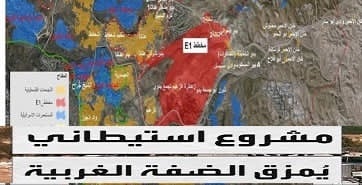
The ‘National Bureau for Defending Land and Resisting Settlements stated in its latest weekly report , that ahead of the Knesset elections, and after decades of refraining from moving forward with the project, the Occupation Authorities last week published the first tender for the construction of a large number of settlement units under the ‘E1 settlement project’, aimed at connecting the ‘Ma’ale Adumim settlement’ to the Jerusalem City. For more than 3 decades, successive Israeli governments had refrained from proceeding with the project due to widespread international opposition.
The tender was published while judicial proceedings concerning the project were still pending before the Jerusalem District Court, and before the Occupying State submitted its official response to a petition filed by the ‘Ir Amim, Bimkom, and Peace Now organizations’, along with a number of Palestinian groups, seeking to halt work on the project. The tender includes the construction of 1,234 settlement units, out of 3,401 units approved as part of the ‘E1 project’. The housing units are distributed among seven separate building complexes within the southern plan, on a hill located north of Highway No. 1, which connects Jerusalem and Jericho, and within the so called municipal jurisdiction of the Ma’ale Adumim settlement’.
In their statement, these associations explained the following, ‘On 19 July, the Israeli State Attorney’s Office informed the petitioners that no tenders related to the E1 project were expected to be published within the next 2 – 3 months, and pledged to notify them in advance if the government decided to proceed with publishing any tenders. However, last Tuesday, the government published the first tender without any prior notice. A conduct constitutes a blatant breach of trust and undermines the principle of good faith upon which the relationship between the state and the parties in legal proceedings is based.
The decision represents a step with far reaching political implications, for over 30 years, successive Israeli governments refrained from proceeding with the E1 project due to its well-known repercussions. Today, the government chooses to launch the first phase of one of the most internationally controversial settlement projects while legal proceedings are still ongoing, and before it has even submitted its response to the court, in clear violation of an explicit commitment to the petitioners.’ A government that claims to respect the rule of law cannot treat its obligations to the judiciary, the parties to legal proceedings, and the public as if it were a matter of choice.
Looking back at the origins of the plan, the E1 area expands about 12km2 i.e. 12,000 dunams, located between Jerusalem and the settlement of Ma’ale Adumim. The idea for the plan was first proposed during the Israeli Prime Minister Yitzhak Rabin’s term in office in 1994, and the municipal jurisdiction of Ma’ale Adumim was expanded to include this area with the aim of creating a contiguous settlement bloc linking it to Jerusalem.
In 1990s, then Israeli Army Minister Netanyahu approved the initial master plan for the area – number 420/4, allocating land for residential, commercial, and tourism development, despite the freezing of the residential component, the occupation authorities constructed the headquarters of the Israeli police in the West Bank known as – the Judea and Samaria District – on the hills of E1, in addition to paving infrastructure roads in preparation for future construction.
The Israeli associations that are mentioned in the International Law find a strength in their attempts to stop this dangerous plan, as international organizations and international law authorities agree that the settlement project in the E1 area represents a grave violation that differs in its political and geographical danger from the rest of the settlement projects. The position of International Law and UN organizations regarding this plan is that it constitutes a clear violation of the International Humanitarian Law and the 4TH Geneva Convention, as Article 49 of the Convention prohibits the occupying power from transferring parts of its civilian population to the territories it occupies.
The International Criminal Court system also classifies settlement and population transfer as a ‘war crime’ within its jurisdiction, in addition, the resolutions of the Security Council and the United Nations General Assembly, especially resolution no. 2334 – 2016, weigh heavily on this situation.
In spite of the lack of integrity of the Israeli judiciary in settlement issues, the abovementioned associations find in the use of legal pressure tools a procedural step to disrupt the plan, enabling them to submit an urgent petition to the Central or Supreme Court, based on the ‘Israel Lands Department’s breach of its contract and its judicial commitment in which it pledged not to publish bids without prior notice and providing an opportunity to object and work to issue an urgent judicial decision to freeze the bidding procedures and stop receiving contractors’ bids until the legality of the Israeli procedures is broadcast, including submitting objections.
Legal documents proving the existence of Palestinian private property ‘land titles or financial’ within the borders of plan no. 420/4/7 to refute the claims that they are ‘state lands’ and activate the tools of international law and the outcomes of the International Court of Justice, and based on the advisory opinion – July 2024, and the use of the International Court of Justice’s decision which considered settlement and the Israeli presence in the West Bank and Jerusalem invalid and illegal as a main reference in the legal messages addressed to international companies, to warn them of the consequences of participating in the tender.
The Occupation Authorities also issued last Tuesday a military order to seize about 1,152 dunums of land in Sinjil, Al-Lubban Al-Sharqiya, and Qariot, with the aim of expanding the ‘Kermi Oz settlement’ – the new name of the settlement outpost Givat Harel – and enhancing geographical communication between the settlements and settlement outposts, located halfway between the cities of Nablus and Ramallah. The targeted lands are located in Natural Basin no. 6 of the Sinjil Lands at the ‘Al-Mughariat site’, and in Basins 1, 2, 3 of the Eastern Laban Lands, at the ‘Khirbet Ayyad, Wadi Ali, and Al-Rahwat sites’. It also includes natural basins 1, 4, 5, and 6 of the Qariot lands, at the sites of ‘Al-Batain, Al-Sarara, Al-Marhan, Sahel, and Haraiq Ein Marra’.
The announcement comes as a continuation and confirmation of Israeli government decisions issued since 2023 aiming to settle the status and legitimize the random settlement outposts in that area, specifically the ‘Givat Harel and Givat Haroeh outposts’, it also comes as an extension of Military Order no. 59 issued in 1967 regarding government property, which is the old, renewed tool that the occupation periodically employs to seize control of Palestinian lands and turn them into state lands to expand settlements, which represents a new episode of an integrated colonial settlement system, it begins with silent seizure, then renews decisions to expand areas, leading to the imposition of seizure of a wide geographical area.
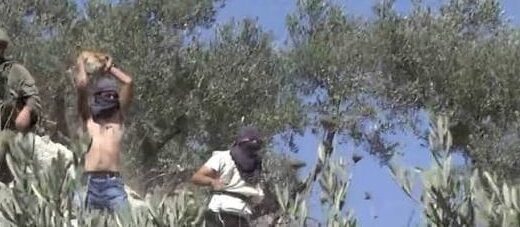
For now, the suffering of Palestinians continues at the hands of settler terrorists, following the crime committed by the occupation army and the ‘Hilltop Youth’ terrorists in the Tell town, Palestinian families in the villages of Jalood and Qusra, south of Nablus, in the village of Turmusayia in the Ramallah and Al-Bireh Governorate, and in Khirbet Al-Hummus in Masafer Yatta, are enduring forced displacement, siege, and ongoing harassment by terrorist settlers, protected and supported by the occupation army. Homes are besieged, basic services are cut off, and military raids are carried out to expel residents and convert the houses into barracks or settlement outposts.
In the village of Jalood, families were forced to evacuate their homes after months of siege, where Mah’d Al-Tubasi and his family were subjected to a brutal forced displacement and a true catastrophe. For 2 months, settlers imposed a complete siege on the family’s home, located in Area B, the displacement included blocking the only road leading to the house with stones and cutting off essential services, such as, water and electricity. The family endured days without food or water until armed settlers stormed their home, threatening them to death or arson, saying, ‘We will burn you like we burned the Dawabsheh family.’ Under the weight of hunger and the direct threat of death, the family was forcibly evicted from their home, which was then converted into an outpost.
Moreover, the Qusra town, whose families in the Ras Al-Ain area are subjected to siege and constant attacks by settlers and occupation forces, the last attack began on the 9 August this year, but the first was launched at the beginning of the year, after the settlers attempted to seize the Al-Ayn mountain area and establish a settlement outpost in the place, targeting and storming the home of citizen Louay Abu Rida, where settlers stole monitoring cameras and smashed windows and doors to force the family to leave.
Followed by the establishment of a pastoral outpost in Feb. when a settler set up 3 tents and settled in them with flocks of sheep as a new herding outpost to tighten pressure on Palestinian families. Over the following months, the settlers repeatedly built the outpost in front of homes, and the townspeople and local authorities succeeded in lobbying for its removal ‘it was demolished and removed about 8 times’. As for the peak of the current escalation, it came on the ninth of this month when these terrorist settlers set up their tent again, completely closing the roads with stones and barriers, and cutting off electricity and water lines to families, which sparked the ongoing crisis and the current siege under the protection of the occupation army.
The Occupation Army acted as a direct partner in imposing the siege and securing settler attacks, turning the area into a closed military zone, scores of soldiers stormed the town and forcibly evicted Palestinian families ‘including the Hassan and Abu Rida families’ from their homes, gathering them in one house and turning the houses into military barracks. The army seized about 16 Palestinian homes in and around Jabal Ras Al-Ain and turned them into military posts, imposed a curfew, and closed shops, using military bulldozers to block roads with earth mounds to prevent residents and solidarity activists from moving around.
The Army and border guards also prevented international and Palestinian peace activists from reaching the besieged homes to deliver flour, water and medicine. Despite the Army’s announcement of dismantling an ‘illegal settlement outpost’ in the area, the army forces maintained the siege on the Palestinian homes and ensured that the town’s residents didn’t approach them, leaving settlers’ vehicles to roam freely inside the closed area. The Army also deployed additional buses carrying soldiers from the ‘Golani Brigade’, to support the ongoing military operations and extend their duration.
The Minister of the Occupation Army, Katz’s decision to transfer the powers of ‘civil law enforcement’ from the army to the police came to reveal the government’s policy. Katz’s move is linked to the Qusra events through security and political paths. He believes that it provides an escape from international pressure, after the US ambassador to Israel, Mike Huckabee, described the settlers’ siege of homes in Qusra as ‘bullying’, and after Washington and France called on the army to intervene and remove the settlers – especially since one of the besieged homes belonged to a Palestinian who holds American citizenship. Instead of the army pursuing the settlers, Katz quickly issued this decision to dismiss attention, reducing the burden, and international criticism directed at the Israeli army as the ‘occupying force’ legally responsible for the region.
By handing over the security of the settlers to Ben Gvir, in accordance with this decision, the responsibility for dealing with settler attacks and establishing their random outposts will be transferred to the Israeli police force, which is directly under the control of this settler and extremist minister. This means that army officers or the ‘Central Command’ will no longer be able to dismantle settler outposts or arrest extremists among them, under the pretext that the matter falls under ‘civilian police jurisdiction’. This grants immunity to terrorists, who trust that the Ben Gvir police will not arrest them or prosecute their crimes.
The West Bank as a whole is witnessing a widespread escalation in attacks by terrorist settler groups, who move between villages and towns, from Tell to Jalood, Qasra, Turmusayia, and Khallet Al-Hummus. They set fire to homes, vehicles, and agricultural land, impose sieges, and subject Palestinian families to forcible harassment, with the aim of displacing them, all under the protection of the occupation forces. No sooner had the town of Tell began to recover from the wounds of its tragedy and the loss of 4 of its residents in the attack it suffered on July 24 than the residents of Jalood, Qusra, and Turmusayia found themselves facing a new kind of tragedy. In Turmusayia, north of Ramallah, the Abu Awad family does also living through a harsh reality on the outskirts of the town, after its home was transformed into something resemble an isolated island surrounded by a settlement environment that continues to expand relentlessly.
The Occupation Army has installed a military gate at the entrance to the house and severely restricted the residents’ movement. Only one vehicle, registered with the army, is allowed to pass through. The family lives under constant surveillance and repeated attacks by settlers from the nearby Shilo settlement’. The family’s land has been bulldozed and destroyed, while all the olive trees surrounding the house have been uprooted.
The surrounding lands have also been turned into an industrial waste dump serving the settlement. Settlers are using the same tactic of besieging Palestinian homes in Khallet Hummus, in the Hebron Governorate. The same is happening to 3 homes belonging to the Shanaran family on the southern side of Wadi al-Rakhim, south of Yatta. Settlers also roam around the homes, destroy property, release their livestock into the yards, provoke residents, and tighten the noose around them in preparation for taking control of the area and displacing its residents.
List of Israeli Assaults over the Last Week Documented by the National Bureau:
Jerusalem:
- Destroying a water well in the Bedouin Community of Bir Al-Maskub, east of Jerusalem, which is a vital water source for the community’s residents.
- Expanding an outpost established near the Bedouin community of Ma’azi Jaba’.
- Forcing Ma’moon Salem Shiokhi to demolish his own home in the Ein Al-Fouqa area in the Silwan Neighborhood, under the pretext of not having a license.
- Demolishing the two-story home of Dheeb Hamad, each floor measuring 250m2 in the village of Qalandia.
Hebron:
- Attacking citizens’ homes with stones and fired live bullets at them, in the Al-Buira area, east of the city of Hebron, 2 citizens were injured by live bullets, and 8 others were beaten by them during an attack carried out by settlers, under the protection of the occupation forces, in the Al-Ras area in the Hebron city.
- Building a road on citizens’ lands in the Abu Ashra area, in the Raboud and Abu Al-Irqan Communities, southwest of Hebron, using heavy machinery, in a clear assault on the lands and residents’ property, while preventing citizens from accessing their lands.
- Demolishing a tin house for the citizen Yasser Ali Abu Sobha, consisting of 2 rooms and a kitchen in Khirbet Al-Fakhit, in addition to demolishing 2 sheep barns, a health unit, and a barn for the citizen Issa Al-Hamamdeh, with an area of 160m2, and a health unit for the citizen Miteb Al-Hamamdeh, in Khirbet Al-Tabban in Al-Musafer.
Ramallah:
- Setting up a settlement outpost and a tent near the entrance to the Deir Jarir town, while others seized an agricultural tractor in the village of Barqa to collect waste belonging to the village council.
- Storing the village of Al-Mughair, a number of citizens suffered from suffocation, after settlers attacked the Sha’ab Al-Lawz Neighborhood, northwest of the village, and attempted to raid a number of homes, before the occupation forces stormed the area and fired poison gas bombs, which led to a number of residents, including children, suffering from suffocation.
- Attacking a vehicle-machinery in a crusher in the Sinjil town, where they stormed the ‘Gharaba area’, cut electrical cables from a stone-cutting machinery, and stole an electronic board, estimated at NIS 60,000. Moreover, settlers grazed their sheep on citizens’ lands, in the ‘Shuria area’, 200 meters away from the entrance to the town, which led to the destruction of agricultural crops.
- Building a new settlement road near homes, west of the Deir Ammar town, amid residents’ fears that it is to expand the settlement outposts established on the town’s lands.
Nablus:
- Attacking a municipal crew from Qusra as they were attempting to restore electricity to homes that had been under siege for nearly two weeks, and they detained 3 members of the crew.
- Cutting down electricity poles supplying the home of the Soufan family, near the Yitzhar settlement, causing a power outage in the Burin town, blocked secondary roads in the village of Beit Ummar, some leading to homes and others to agricultural land, all located in Area A.
- Assaulting residents of the pastoral outpost established on Al-Masodiya area, beaten and sprayed them with pepper spray, and damaged their car.
- Storming the eastern part of the Beit Dajan town, and demolished a 100m2 residential structure, 2 agricultural sheds, and a water collection well belonging to Nader Raja Haj Muhammad.
Tulkarm:
- Cutting down a number of fig trees and vandalized an agricultural irrigation network, near the Rameen village, while others began establishing a new settlement outpost in the village of Al-Nazla Al-Sharqiya, linking the ‘Harmish settlement and the pastoral outpost’ established in the Sunbulah area. The pastoral outpost established in the area is only about 150 meters from the village, which constitutes a direct threat to the population and lands, and increases fears of the expansion of the new outpost and the seizure of More citizens’ lands.
- Handing over 4 demolition orders, including a 10-storey residential building belonging to the citizen Alaa Mdallal, a villa to the citizen Jamil Mdallal, and another to the citizen Younis Harb in the Kafr Sur village, in addition to a house for his brother Moh’d Harb under construction. The targeted buildings are located on the western side of the village, near the Apartheid Wall, noting that the owners of these houses possess the necessary identification papers and licenses, and that they are located in area B.
Jenin:
- Returning from carrying out fieldwork and missions in the city of Jenin and the towns of Al-Yamoun and Kfardan, the Northern Electricity Distribution Company’ crew was intercepted by guards from one of the settlements, who forced their vehicle to stop, searched it, tampered with its contents and the employees’ mobile phones and personal identity cards, and seized a sum of money from one of the employees before allowing them to continue on their way.
- Detaining 2 citizens while they were picking the prickly pear fruits from their land before 2 armed settlers approached them from the settlement outpost established in the area and detained them, until the arrival of the occupation forces, who arrested farmers Munir Salah, 44, and Ahmed Abdullah Zidan, 75.
Jordan Valley:
- Demolishing about 20 homes built of plastic, zinc panels, and cement, including 3 inhabited homes that are used seasonally by farmers in the Al-Daisat Community in Al-Jiftlik area, it was notified of the demolition of about 40 permanent homes for sheep owners, while the occupation forces, accompanied by settlers, continued to destroy agricultural crops and water lines in the Buqi’a Plain in Ras Al-Ahmar in the northern Jordan Valley.