المكتب الوطني للدفاع عن الارض ومقاومة الاستيطان منظمة التحرير الفلسطينية
مقالات مشابهة
Settlement Weekly Report 23 – 28 August, 2026
By: Madeeha Al-A’raj
The ‘National Bureau for Defending Land and Resisting Settlements stated in its latest weekly report , that the decision by Israeli Army Minister Yisrael Katz to transfer the so-called ‘law enforcement’ powers in the West Bank from the occupation army to the Occupation Police continues to fuel controversy between army commanders and the minister. Last Sunday, Ha’aretz revealed that the occupation army intends to inform Katz of its legal and professional position that, under the current legal framework, it is impossible to transfer law enforcement powers over settlers in the West Bank to the Israeli police.
The Army maintains that a complete transfer of these powers would only be possible if the occupied West Bank were formally annexed to Israel. According to the newspaper, assessments within the occupation army indicate that the decision is driven not by professional considerations but by political motives, particularly ahead of the Knesset elections scheduled for October.
These motives include paving the way for the establishment of new settlement outposts and ‘farms’ in the West Bank, while shielding both the minister and the army from responsibility for law enforcement in those areas. Haaretz explained that the army is currently seeking to avoid a public confrontation with Katz and instead intends to present its position on both legal and professional grounds. The central issue in the expected discussion will be the extent to which enforcement powers can be transferred to the police under the existing legal framework.
In accordance to the newspaper, the Army’s position is based on the provisions of Israeli and International Law since its occupation in 1967, the West Bank has not been legally considered part of Israel. Consequently, the commander of the Central Command in the Israeli Army is responsible for administering the West Bank by virtue of his authority as the military commander of the region. The military establishment believes that transferring enforcement powers necessitates, first and foremost, a legal settlement regarding the source of authority in the West Bank, the chain of security command, and legal responsibility for field operations.
The Israeli Army officials warn of the international repercussions of this move, emphasizing that as long as Israel has not officially imposed its laws and ‘sovereignty’ on the West Bank, legal responsibility for the territory will remain with the army, even if some enforcement powers are transferred to the police. It includes the responsibility of Israeli officials for what happens in the West Bank before international courts and bodies, most of the Israeli army leadership opposes the plan to transfer these powers to the police in its current form, with the exception of the Coordinator of Government Activities in the Territories, Yoram Halevy, who proposed a plan to transfer only part of the powers.
The Army Minister, Katz’s decision to transfer law enforcement powers in the West Bank to the police constitutes a direct and automatic legal indictment against the Israeli political and military leadership before the ICC. It provides the ICC Prosecutor with concrete and documented evidence proving the commission of war crimes and crimes against humanity. The direct legal implications of the decision for the ICC’s ongoing investigations are multifaceted, including establishing the crimes of ‘creeping annexation, and settlement’ as war crimes.
Under the Rome Statute – Article 8, ‘the transfer by an occupying power of parts of its own civilian population into the territory it occupies’ is considered a war crime. The decision also dismantles the Israeli argument that its presence in the West Bank is a ‘temporary military occupation’ necessitated by security requirements. In such case, transferring powers to a civilian police force – subject to a political minister like Ben-Gvir – removes the ‘temporary’ pretense and presents the Court with official evidence from the Israeli government of implementing a ‘de facto annexation’ of the occupied territory.
A decision also represents a typical application of the crime of apartheid as defined by the International Criminal Court; the procedure results in two human groups living in the same geographical area being subjected to 2 completely separate legal systems, the settlers, who are subject to Israeli civil law and the police force – the treatment of a citizen within the State of Israel- and the Palestinians, who are subject to strict military orders, military courts, and the occupying army.
The security and legal concerns underlying the army’s opposition to the decision can be summarized in 3 areas: legal obstacles, the risk of international prosecution, and potential international criminal liability. The Army warns that, as long as formal Israeli ‘sovereignty’ is not imposed over the West Bank, legal responsibility before international courts and bodies for any violations or field operations will remain with the army leadership, even if enforcement powers are transferred to the police.
Legal experts within the army argue that such a transfer would first require a complex legal and institutional arrangement concerning the source of authority in the occupied territories and the chain of command over security operations. The Army also believes that the request is driven primarily by political considerations, particularly as the Knesset elections scheduled for next Oct. approach. Its aim, according to the army, is to facilitate the establishment and consolidation of settlement outposts and unauthorized “farms” without leaving the army with the military authority to evacuate them or enforce the law against them. At the same time, the Army argues that the police lack the necessary capabilities to assume the burden of these responsibilities in the West Bank.
Together with Israel Katz, PM Netanyahu’s position is characterized by implicit support directed at maintaining the stability of his ruling coalition and avoiding a clash with his far-right allies. The real motives and positions of the 2 men can be detailed as follows, ‘The real motives of Army Minister Katz are to appease the extreme right and the settlers, as Katz seeks to consolidate his political position within the Likud Party and gain the satisfaction of the right’s electoral base, and proving that he adopts a policy different from his predecessors, who always supported the position of the army commanders.
Netanyahu’s position is one of indirect support and tacit approval, he didn’t object to Katz’s decision, rather, the joint coordination steps – such as forming cooperation frameworks between the Shin Bet, the police, and the army – were originally launched based on previous directives from Netanyahu to calm the tense situation within the coalition. Netanyahu is aware that his extremist partner Ben Gvir regularly threatens to topple the government if he isn’t handed broader powers in the West Bank.
Thus, Netanyahu considers Katz’s move a ‘safety valve’ that satisfies Ben Gvir. A decision that is also consistent with Netanyahu’s long-term strategy, which depends on gradually transferring the management of civilian life for settlers in the West Bank from military bodies to Israeli civilian bodies and ministries ‘which he had previously begun by granting broad powers to Minister Smotrich, in order to avoid provoking sharp international reactions or immediate international prosecutions.
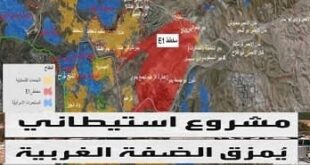
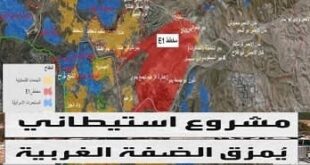
The Netanyahu government’s move to publish a settlement tender for the construction of 1,200 housing units in the E1 area between Jerusalem and Ma’ale Adumim in the West Bank, without notifying the Attorney General, has sparked controversy in Israel. A move, according to Ha’aretz, aims to preempt the elections scheduled for the end of Oct. and impose legal and administrative facts on the ground that will be difficult to reverse. The Israeli Attorney General’s office had pledged to the Jerusalem District Court – acting as an administrative court – to inform the petitioners in advance of the tender’s publication date, as part of a legal proceeding that has been pending since last year.
However, an urgent injunction filed by the organizations Ir Amim, Peace Now, and Bimkom, along with attorney Michael Sfard, on behalf of the Palestinian residents, revealed that even the lawyers representing the Israeli government were unaware of the intention to publish the tender. In this regard, lawyer Michael Sfard asserted that this behavior and the sudden opening of the tender immediately after its publication are aimed at thwarting the pending legal proceedings concerning the legality of the plans and accelerating the ethnic cleansing of Palestinian Bedouin communities in the area to pave the way for their expulsion.
He pointed out that the announcement of the winner might come days after the elections, thus tying the hands of the incoming government. The tender has sparked widespread condemnation from Britain, France, Germany, Italy, and the European Commission, as well as 8 Arab and Islamic countries, including Egypt and Jordan.
Moreover, last week turned into a bazaar for extremist positions on the eve of the upcoming elections for the Knesset at the end of next Oct, Netanyahu, who is wanted by the International Criminal Court for war crimes in the Gaza Strip, bragged about his government’s approval of 264 settlements and settlement outposts in the occupied West Bank, and told settler leaders that they were ‘paving the way for a great migration to come.’
He was speaking to settler leaders at a meeting held last Tuesday at the headquarters of the Israeli Ministry of Army ‘Kiryah’ in Tel Aviv, added, ‘You are realizing the vision of the Land of Israel, and this is our land. Today, many of our brothers and sisters in the world realize that this is our land,’ adding, ‘and when I say our land, I say to every Jew: The door is open, we are waiting for you.’ ‘You are paving the way for a great migration to come. You cannot ignore the numbers: 104 settlements that we created, we settled together with 160 farms ‘settlement outposts’, and more are on the way.’
For his part, the Smotrich, who leads Netanyahu by the nose in this regard, also bragged about what he described as the ‘settlement revolution’ in the West Bank as a security revolution in Israel and that the farms and settlements that his government established in the West Bank are the protection wall for the settlements of Petah Tikva, Ra’anana, Givatayim and all of Israel. He added, the people of Israel are coming in huge numbers to see the new farms and settlements we have established – and this is amazing! standing on the farm in Judea and Samaria, and seeing your home from afar in Beit Tikva.
Smotrich announced that the commander of the Central Command of the Israeli Army had signed off on the designation of 18 new areas of influence for settlement outposts in the occupied West Bank. A move expands the areas under settlement control and paves the way for construction, expansion, and infrastructure development. He stated that this step is part of what he called a ‘settlement revolution,’ and boasted that the occupation authorities had, in less than a year, pushed for the designation of ‘70 new areas of influence’ for settlements and outposts.
Allocating areas of influence delineates the administrative and planning boundaries of settlements and outposts, subsequently allowing for the expansion of construction, the building of roads, and their connection to infrastructure, as well as paving the way for the legalization of existing outposts. This step is part of an Israeli policy to expand control over Palestinian land, in parallel with the legalization of outposts, the expansion of existing settlements, and the establishment of new settlement blocs.
The Extremist Knesset member, Tzvi Sukkot, from the Religious Zionist Party, who resides in the settlement of Yitzhar, a known terrorist stronghold south of Nablus, also had his place in this political arena. Last week, he vandalized a memorial to Palestinian martyrs in the village of Madama after storming the town center under the protection of the occupation army. The destruction of the memorial by this far-right extremist sparked controversy and sharp criticism from Israeli leaders in both the government and the opposition, who described the act as a ‘disgrace’ that damages ‘Israel’s standing in the world.’
Gadi Eisenkot, leader of the Yesh Atid party, stated via the X platform that ‘Tzvi Sukkot’s behavior is a disgrace to those who claim to represent the people and the leadership’, adding that Sukkot ‘lied to and deceived the army and its commanders, harmed security, and tarnished the reputation of all of Israel.’ Meanwhile, the leader of the opposition Democratic Party, Yair Golan, stated via the X platform that ‘this man belongs in prison, not in the Knesset.’
The incident of attacking the Madama memorial is a new link in a chain of previous actions by this deputy, such as his attempt to storm schools in the city of Um Al-Fahm last June, which was confronted by Palestinian citizens in the city, and the storming of the courtyards of Al-Aqsa Mosque in April 2025, accompanied by thousands of settlers, and performing the so-called ‘epic prostration’, which was welcomed by the far-right Minister of National Security, Ben-Gvir.
On another front, settlers continue to seize Palestinian water sources across the occupied West Bank, amid a surge in attacks on Palestinians, in the village of Fasayil in the Jordan Valley, settlers recently seized an irrigation pipeline and diverted the water to an old pool at an archaeological site, which they use for swimming. The move has left Palestinian fields without water, bringing agricultural activity to a halt. Farmer Sa’d Nimr said that water has been cut off from farms in the area for about 3 months, causing losses to farmers and families who depend on agricultural work. He added that one of the workers had also been assaulted.
Settlers are promoting the pool to which the water was diverted as an Israeli tourist site, while Smotrich has pledged funding to restore and develop what he described as the ‘Herod’s Pools.’ According to UNs’ data, settlers have attacked at least 160 water and sanitation facilities in the Palestinian territories since the beginning of the year. For his part, Adel Yassin, Director General of Planning at the Palestinian Water Authority, said that targeting water sources is part of a systematic campaign aimed at forcing Palestinians to leave their lands.
List of Israeli Assaults over the Last Week Documented by the National Bureau:
Jerusalem:
- Handing over demolition orders for about 30 homes, walls, agricultural structures, and livestock pens in the Wadi Beik area of Anata, under the pretext of building without permits.
- Constructing a new settlement road in the Wadi al-Kibeh area in Beit Anan, stormed the community, photographed residents and provoking them in the Al-Ma’azi Bedouin Community east of Jaba.
- Handing over demolition ordersd for several structures and buildings near the Apartheid Wall in Kafr Aqab, north of Jerusalem. The Jerusalem Governorate stated that occupation forces stormed the area adjacent to the wall and posted the orders in preparation for removing the structures, noting that these measures aim to depopulate the areas adjacent to the wall’s route and restrict Palestinian urban and population growth.
Hebron:
- Beating Sae’d Al-Amour in the village of Al-Rakeez, causing him to suffer injuries and bruises, after which he was transferred to Yatta Governmental Hospital.
- Transporting a number of caravans to the ‘Doron settlement outpost’, which the occupation began establishing last June on citizens’ lands in Mount Tarusa in the Duira town, noting tha Smotrich stormed the area after that, accompanied by a number of occupation government ministers and settler leaders, and they participated in the foundation stone laying ceremony for the new settlement, which is one of 19 new settlements that the occupation government approved to establish in the West Bank last year.
- Attacking citizens’ houses, fired live bullets heavily towards the people, which resulted in injuring an elderly man, 70, by live bullets, and a young man was injured in the chest, his condition described as serious, they also set fire to a house, causing it to burn in Khirbet Hamroush in Sa’ir.
Bethlehem:
- Uprooting olive trees and vines from citizens’ lands in the village of Minya, which belonged to the Al-Shalalda family, injured 3 citizens with bruises and wounds, as a result of settlers attacking them in the Za’atara wilderness, where they attacked citizens’ homes in the ‘Al-Hashweh area’ and severely beaten a number of citizens, which led to 3 of them sustaining bruises and wounds, after which they were admitted to a hospital. They also stole a number of sheep heads belonging to the citizen Moh’d Al-Badawi.
- Storming an area in the village of Abu Najim, southeast of Bethlehem, assaulted citizens, rebuilt a settlement tent, attacked a vehicle, beat and broke a number of olive trees, before rebuilding a settlement tent in the context of attempts to establish a settlement outpost.
Ramallah:
- Establishing a new outpost on citizens’ lands in the ‘Marj Sei area’, located between Turmusaya and Al-Mughir, and installed caravan in the place., dashed a vehicle near the Abu Falah village, caused material damage to it.
- Bulldozing lands in the vicinity of the Um Safa,village’s cemetery, and began expansion work for the new settlement outpost established on citizens’ lands in ‘Wadi Al-Zaytoun’ in the village.
- Stealing wood from the Hait Al-Marmiya area, east of Abu Falah, before fleeing with the wood toward the settlement outpost established in the area.
- Setting fire to old olive trees in the Al-Qibli area in the village of Barqa and prevented fire crews from reaching the fire, which prevented them from being able to begin extinguishing the fire in a timely manner.
- Burning parts of an aluminum factory by throwing a Molotov cocktail at it, caused fires to ignite in the vicinity of the factory and its main door in the village of Ain Sinya.
Nablus:
- Setting fire to a residential room belonging to citizen Asir Bani Jaber in the northern area of the town of Osarin and partially damaged a vehicle, and wrote racist slogans at the site.
- Uprooting ancient trees belonging to citizen Amin Rashid Dawabsheh in the village of Duma., and in Khirbet Marajem near the village, a group of settlers stormed the area surrounding the home of citizen Naif Musa Salman and grazed livestock in the area, which led to the destruction of olive trees.
- Attacking the house of Firas Jadallah Nassar, amidst the sound of gunfire in the area, occupation bulldozers demolished sheds and sheep pens in the Shakara Neighborhood of the village, and cut down a number of electricity poles in the neighboring town of Burin in an attack that is the second in a week, which supplies the Soufan’s family with electricity.
Tulkarm:
- Storming the Al-Nazla Al-Sharqiyah village, and roamed its alleys, streets and between houses in a provocative manner, which sparked a state of tension and anxiety among citizens, they began placing ‘Caravans’ on the village lands, in preparation for establishing a new settlement outpost there.
- Stoning citizens’ vehicles as they passed under the Jabara Bridge, south of Tulkarm.
Jordan Valley:
- Injuring a 15 years old child as a result of being severely beaten by settlers in the Tammoon town.
- Destroying water lines and chased citizens’ livestock in the pastures near their tents in the village of Yarza and the Al-Baqi’a Plain, and forced them to leave.
- Attacking solar panels supplying 3 families living in the ‘Al-Thaala area’, east of Tammoun, which led to a power outage for the families.
- Excavating works to expand the vicinity of the Al-Hamma Spring in the northern Jordan Valley, for the benefit of the settlers, stormed the area accompanied by a bulldozer, and forced citizens to evacuate their cows from the vicinity of the spring and prevented them from drinking.